



By News Desk
Jun 16, 2026
500 hidden earthquakes beneath Antarctica, and the strangest ones are shaking the middle of a tectonic pla
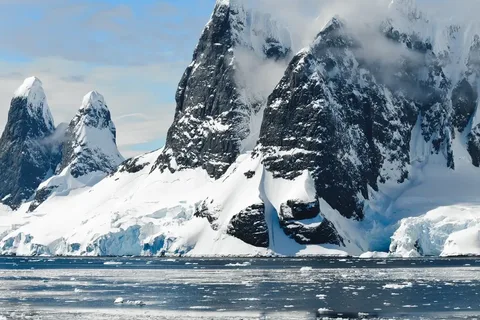
When it comes to earthquakes, Antarctica has always been the calm, frozen outlier. Most of the planet’s shaking occurs where tectonic plates grind against each other, and Antarctica is in the middle of one giant plate, far from those messy edges. That reputation just received a blow. In a new study published in the journal Science, researchers used artificial intelligence to comb through two decades of old seismic data, uncovering more than 500 previously unreported earthquakes lurking beneath the East Antarctic Ice Sheet. And they were not where anyone expected to find them. The story turns things around for an American audience accustomed to hearing about earthquakes in California or Alaska. According to the same Science study, these quakes occurred about 60 to 90 miles down, beneath a massive river of ice called the David Glacier, which stretches nearly 700 miles and dumps about 4 percent of the entire East Antarctic Ice Sheet into the ocean. Why this site puzzles geologists What’s confusing for experts is that earthquakes this deep, called intermediate-depth earthquakes, almost always occur at subduction zones: the boundaries where one tectonic plate dives beneath another. According to the study's authors, David Glacier isn't close to a plate boundary. It sits in the middle of a single plate, which makes these quakes a real puzzle to the science of plate tectonics. So what’s shaking the ground in a spot where it shouldn’t? According to lead researcher Long Ho, a geologist at the University of Alabama, the explanation comes down to the temperature differences deep in the Earth. The crust and upper mantle beneath East Antarctica are cold and stiff, whereas beneath West Antarctica they are warm and weak. Ho says the contrast between the two very different zones where they meet creates intense stress, which triggers the tremors. The detected quakes ranged in magnitude from 1.6 to 3.5, the same report said. Near David Glacier, the edges of the crust are being bent by warm material rising from the upper mantle beneath West Antarctica, building pressure that is eventually released as small earthquakes. Where East and West Antarctica quietly clash, beneath David Glacier. How AI cracked a two-decade-old mystery This discovery almost didn't happen. Or not in this way, at least. According to the Science paper, the seismic data itself was not new. Part of it was gathered from 2001 to 2004, and another batch from 2012 to 2015, using readings from 49 seismic stations around the continent. That data just sat there for years because traditional analysis methods weren't sensitive enough to pick out small, faint signals buried in the noise. Machine learning altered all that. The same research team previously published a paper on automated seismic detection methods in Antarctica, reporting that training AI models to recognize subtle earthquake signatures allows scientists to go back through old recordings and find quakes that were completely missed by traditional methods. It's a reminder that sometimes the missing piece isn't more data but a smarter way of looking at existing data. According to glaciologist Richard Alley of Penn State, who was not involved in the research, Antarctica's apparent lack of earthquakes was never really about a lack of seismic activity. It was the absence of sufficiently sensitive tools to detect it. According to Alley, the 2001-2004 data is only now yielding these new results because modern analytical techniques have finally caught up with what the instruments originally recorded. Should anyone be worried Not really, not yet anyway. According to Ho, these quakes are too small in magnitude to pose a threat to the overlying ice sheet or any nearby ecosystems. The team of researchers said they are not worried about structural damage from this particular seismic activity. The ice sheet has been hiding something for 20 years. That said, the broader implications extend beyond Antarctica. Quakes like these may have been happening quietly in the middle of a tectonic plate without anyone noticing, according to Ho. Similar activity could be happening in other parts of the world, just at magnitudes too small to detect with older detection methods. The same is true for a similar study of continental mantle earthquakes published in Science, which also indicates scientists are coming to understand that deep mid-plate seismic activity may be more common around the world than previously thought. Better detection tools could alter how scientists think about earthquakes occurring within tectonic plates rather than just at their edges. What researchers want to figure out next The next research goal, according to Ho, is to understand how the weight of the Antarctic Ice Sheet itself might be affecting where these earthquakes occur and whether a shrinking or moving ice sheet could change seismic patterns beneath it as the climate continues to warm. According to Alley, it remains an open question why these quakes are clustering specifically around David Glacier rather than being more evenly distributed across the nearby mountain ranges in the region. He suggested the answer could be linked to how the ice sheet has expanded and contracted over thousands of years, or to a longer geological history of erosion that has shaped that part of the continent. Alley says research like this continues to matter because understanding the seismic history of the continent can help scientists understand its past, and its possible future, especially as warming temperatures put new pressure on the stability of the ice sheet. The takeaway for now is less about danger than about how much remains unknown beneath the ice. As AI tools get better, scientists expect to see more hidden seismic activity come to light, both in Antarctica and possibly in other quiet corners of the globe we’ve never had the technology to hear properly.
Source: The Economic Times