



AI finds signs of pancreatic cancer before tumors develop
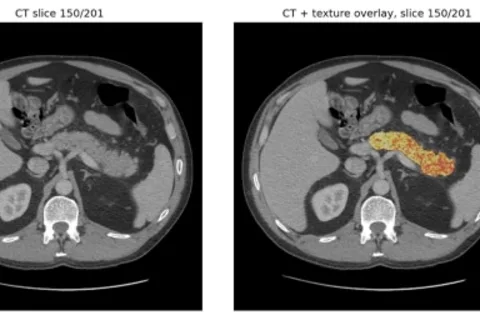
By the time doctors detect pancreatic cancer, it’s often too late to treat effectively. But a new study suggests that artificial intelligence might be able to find signs of the disease before tumors are visible on a scan. An AI model developed at the Mayo Clinic in Rochester, Minnesota, detected abnormalities on patients’ CT scans up to three years before they were diagnosed with pancreatic cancer, according to research published this week in the journal Gut. The scientists trained the model using CT scans from patients screened for other conditions who later developed pancreatic cancer. Radiologists reviewed these scans and compared the AI’s ability to detect early signs with their own. The AI was found to be three times better at identifying these early signs. Dr. Ajit Goenka, a radiologist at Mayo Clinic and study author, explained that the disease’s biology suggests early signs are present but hard to detect. With a five-year survival rate of 13%, pancreatic cancer is projected to become the second-leading cause of cancer deaths by 2030. Around 80% of patients are diagnosed at an advanced stage. Unlike colon or breast cancer, there’s no routine screening for pancreatic cancer in healthy people. Symptoms like stomach pain and weight loss appear only after the cancer has spread. Early markers are often too subtle for human eyes to spot on scans. Dr. Daniel Jeong, a diagnostic radiologist, noted that radiologists typically look for measurable masses, which require tumors to grow before visibility. The AI model detected abnormal cells in the pancreas that protect cancer from the immune system—a known but hard-to-spot feature. The model could help screen individuals with risk factors (e.g., family history, diabetes) without symptoms, prompting further testing. The AI is part of recent advancements in pancreatic cancer research, including an mRNA vaccine trial that prolonged survival in eight patients and an experimental drug, daraxonrasib, which doubled life expectancy in later-stage trials. The FDA has allowed expanded access for advanced patients who have tried other treatments. Researchers also work on advanced blood tests to identify disease hallmarks. Dr. Tamas Gonda, director of the pancreatic disease program at NYU Langone, emphasized that while progress is being made, the disease remains challenging. Doctors believe early detection could increase surgery, chemotherapy, or radiation candidates. The Mayo Clinic’s model is still in clinical trials, requiring three to five years to assess outcomes. Dr. Pam Hodul, a surgical oncologist, called it a potential game-changer for early detection. AI has shown promise in diagnosing other conditions, with a recent study in Science showing it either matched or outperformed human physicians in emergency room diagnoses. Goenka noted that widespread public use may take years as trials continue.
Source: NBC News