



Anthropic's best model ever was pulled from the internet — here's what actually happened
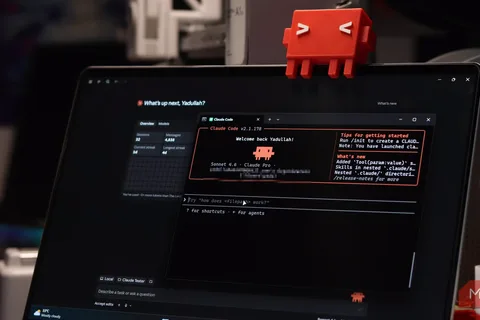
On June 9, 2026, Anthropic released Fable 5 to much fanfare. It was the first publicly available version of its Mythos-class model, the most capable AI model the company had ever shipped to the general public, and within hours, it was sitting at the top of just about every major benchmark. It beat both ChatGPT and Gemini, was labeled state of the art, and before developers could even finish wiring it into their workflows, it was gone. Claude's Fable 5 was pulled by an export control directive, citing national security concerns over its capabilities, particularly in cybersecurity. I gave Claude's new model real work, and it earned the hype fair and square. So what happened? To understand why pulling this model was such a shock, you have to understand what Anthropic actually built. Fable 5 isn't a standalone model — it's a safety-constrained version of Mythos 5, the company's most powerful system developed under an internal project called Glasswing. Mythos 5 was gated behind a partner program limited to 150 organizations across 15 countries, but Fable 5 was supposed to be the version the general public could use. Anthropic released a report with staggering benchmark results. On SWE-bench Pro, a realistic software engineering evaluation, Fable 5 scored 80.3%, compared to GPT-5.5's 58.6% and Gemini 3.1 Pro's 54.2%. On FrontierCode Diamond, a production-style coding test, it hit 29.3% while GPT-5.5 managed only 5.7%. On Humanity's Last Exam, arguably the hardest knowledge benchmark, it scored 64.5% with tools — more than 12 points ahead of GPT-5.5. What Fable 5 deliberately blocked were questions about cybersecurity, biology, and chemistry tasks. These queries were routed to the older Opus 4.8 model instead. Mythos 5's score on ExploitBench, a benchmark measuring automated vulnerability exploitation, was 78%. Fable 5's effective score was zero, courtesy of Anthropic's safety classifiers. The real-world tasks where Fable 5 consistently impressed Benchmarks are benchmarks, and real-world usage of an AI model can be drastically different. When Fable 5 first appeared in my Claude models menu, I was told I would have access to it until June 22. The access got revoked far sooner than I thought, but I was able to put the model through a series of everyday troubleshooting and general tasks. Fable 5 was able to help me save my Linux server installation by walking me through fixing a botched Nvidia driver install that killed the boot sequence on my newest kernel. The model helped me remove the driver, reinstall Wi-Fi drivers for the kernel, which got wiped during the Nvidia driver uninstallation, and navigate between different kernels, with nothing except photos of my Linux terminal. When I couldn't reach a Docker container running Shadowbroker on my Linux server, Fable 5 walked me through port bindings, UFW rules, iptables, and ss output before cross-referencing older conversations that I'd been confusing my Linux machine's IP with my Home Assistant VM's IP the entire time. It also helped me dial down filament settings for a new spool on my Bambu Lab A1 Mini 3D printer, and since Claude can design 3D parts for you, Fable 5 didn't disappoint there either. I even squeezed some outfit advice along the way, and Fable 5 got that right too. The hype focused on its cybersecurity and molecular biology capabilities, but what stood out in my time with the model was something far harder to benchmark. It holds context across long sessions, doesn't overcomplicate things when the answer is simple, and works with real constraints instead of imagining its own. You have a very good chance of one-shotting a project, provided you prompt it right. It was gone as quickly as it appeared One directive, and Fable 5 was gone with the wind On June 12, Anthropic received a letter from Commerce Secretary Howard Lutnick, directed to CEO Dario Amodei. The US Commerce Department's Bureau of Industry and Security had issued an export control directive demanding that all access to Fable 5 and Mythos 5 for any non-US national, anywhere in the world, be revoked. The order included Anthropic's own non-US citizen employees. The government's rationale was a jailbreak. Someone had allegedly demonstrated to officials a method that could bypass Fable 5's safety filters and unlock Mythos's cybersecurity capabilities. The directive invoked national security authorities and gave Anthropic practically no time to respond. Since Anthropic can't verify the nationality of hundreds of millions of users in real time, except for perhaps employing some rather invasive methods, it did the only thing operationally permitted: it suspended access for both models for everyone globally. As for the jailbreak itself, Katie Moussouris — reportedly the only outside expert who reviewed the classified research report behind the ban — reviewed the evidence and claimed that no jailbreak occurred. The researchers apparently took open-source code with known CVEs, combined with new code with deliberately planted vulnerabilities, and asked Fable 5, Mythos, and Opus to review the code for security issues. Fable 5 refused. The models were then asked to fix the code, and through a 'multistep and manual process,' turned the output into scripts that test the patches. That's it. Good models disappear, lessons remain What Fable 5 revealed about AI evaluation and what users actually value Even if access to Fable 5 eventually gets restored, this incident has permanently affected how top-of-the-line AI models will be viewed. This suspension is the first example of an export directive applied to an AI model. Not the chips that rain it, not the data used to build it, but the model itself. It has never happened before, and it sets a precedent that's scary to some. For developers and businesses, it clearly indicates that jumping immediately to the latest and greatest AI model isn't necessarily the best approach. It was the way of things for at least the last two years of AI development, but compliance is something most teams haven't considered yet. But the bigger question this raises isn't about jailbreaks or export controls. It's about who controls AI capability at the frontier, and under what conditions that capability can be switched off. Anthropic built a model that beat everything on the market, but the government decided, on the basis of a disputed jailbreak, that the rest of the world shouldn't have it. And because AI infrastructure is centralized in a handful of companies operating under US jurisdiction, that decision sticks, instantly and globally. Fable 5 didn't just leave behind benchmark records. It also demonstrated how fragile access to the most powerful AI tools in the world can be.
Source: MakeUseOf