



Humanoid Robots Begin Replacing Factory Workers in China, Working 64-Hour Shifts and Driving Industrial Automation Forward
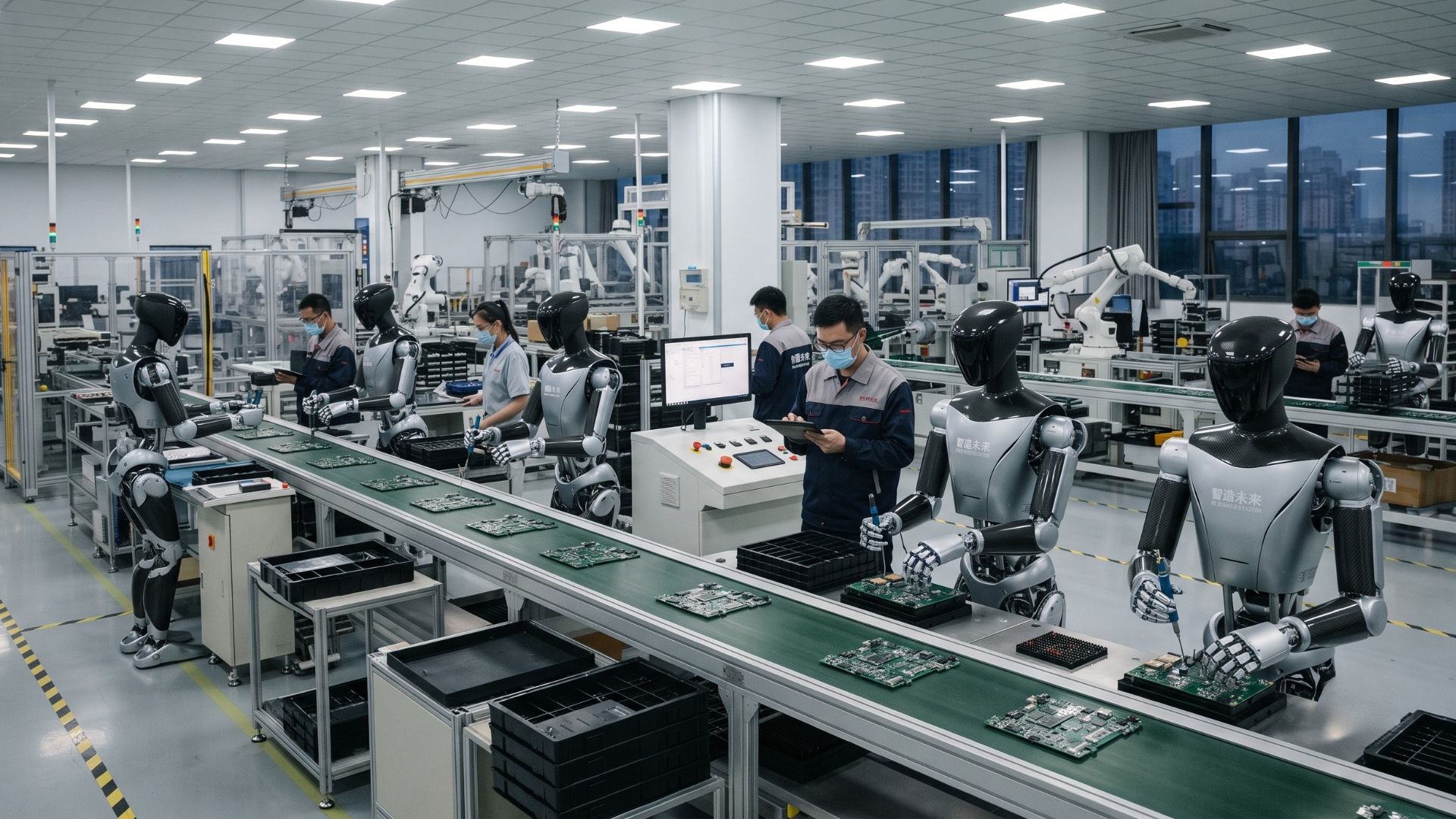
Chinese companies expand the use of humanoid robots in production lines to perform repetitive tasks and address labor shortages. The Chinese industry is accelerating the adoption of humanoid robots in factories, but not to replace all workers at once. The initial focus is on repetitive, physically demanding tasks considered unattractive, such as part inspection, component handling , supplying production lines, and assembling electronic products. One of the companies leading this movement is AgiBot , a humanoid robot manufacturer founded in 2023 by former Huawei engineers. In recent months, the company has started demonstrating its robots working on real production lines and announced that it has already surpassed the mark of 15,000 robots produced , expanding its manufacturing capacity to serve industrial companies. According to William Shi, president of AgiBot for Europe and the Americas, the company’s objective is to use humanoid robots mainly in activities considered dangerous, repetitive, or undesirable by workers. AgiBot robots – Disclosure These robots are being developed to perform functions such as transporting parts, feeding machines, conducting visual inspections, and assisting in assembly processes within factories. The company states that, in the future, humanoids may also operate in other areas, but the current focus remains on the industrial market. Robots are already working in electronics production lines One of the most recent demonstrations took place in a factory of Longcheer Technology , a Chinese electronics manufacturer. During a live broadcast conducted by AgiBot, the humanoid robots remained in operation for more than 64 hours , performing different stages of the production line. According to the company, they participated in more than four industrial streams, performed 64,828 tasks , contributed to the manufacturing of 17,625 tablets , and achieved a reported success rate of 99.99% in the activities executed. These numbers were released by AgiBot itself and represent internal demonstration results. China bets on robots to tackle labor shortages The expansion of robotics occurs amid the aging Chinese population and the gradual reduction of the active working-age workforce. According to Reuters, the Chinese government is investing billions of dollars to stimulate the development of humanoid robots as part of the national industrial modernization strategy. At the same time, companies seek to increase productivity and reduce dependence on repetitive manual activities, especially in sectors such as electronics, automobiles, and logistics. Important limitations still exist Despite the advances, experts say that humanoid robots are still far from replacing workers on a large scale. Reuters highlights that most equipment continues to operate in highly controlled environments, where tasks are predictable and repetitive. Issues related to hand dexterity, autonomy, cost, and reliability still limit adoption in many more complex activities. In 2025, for example, only about 12,000 humanoid robots were sold in China, with a large part destined for research and industrial testing. The race involves dozens of companies AgiBot is not alone in this race. Several Chinese companies have been investing in humanoid robots for industrial applications, driven by a supply chain strengthened by the electric vehicle industry and recent advances in artificial intelligence. Besides the hardware, one of the main challenges is in the development of systems capable of teaching robots to manipulate objects with human-like precision, especially using more sophisticated robotic hands. The future of automation should start with the most repetitive tasks Experts interviewed by international outlets highlight that the first impacts of humanoid robotics should occur precisely in repetitive roles within factories and logistics centers. use of humanoid robots in production lines to perform repetitive tasks and address labor shortages. Instead of completely replacing entire professions, the trend currently observed is the gradual automation of specific activities, allowing workers to be shifted to roles in supervision, maintenance, programming, and control of the automated systems themselves. Demonstrations conducted by AgiBot indicate that this transition has already begun in some Chinese production lines, although large-scale adoption still depends on technological evolution and the reduction of equipment costs.
Source: CPG Click Oil and Gas