



Katha Room and Guitar Wiz put India on Apple's Design Awards finalists list
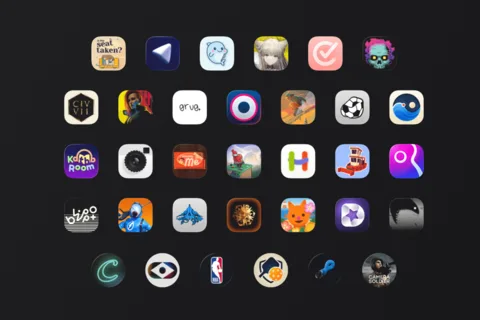
Apple has announced the 36 finalists for this year's Apple Design Awards, its annual recognition of the most thoughtfully built apps and games across its platforms. Spread across six categories — Delight and Fun, Inclusivity, Innovation, Interaction, Social Impact, and Visuals and Graphics — the list spans solo developers and major studios, bedroom projects and decade-long labours of love. Among the more notable inclusions are two apps with Indian origins. Katha Room, developed by Parjanya Creative Solutions, is a bedtime stories app rooted in Indian folklore, its interface drawn from the visual language of Gond art — intricate patterns, saturated colours, and considered sound design that invites listeners to fill in the imaginative gaps themselves. Guitar Wiz, built by solo developer Bijoy Thangaraj, earned its place in the Inclusivity category for its unusually thorough accessibility features, including VoiceOver integration that guides players through pitch, chord guidance, and finger placement, alongside support for Dynamic Type and Increased Contrast. Delight and Fun The Delight and Fun category showcases apps that commit fully to a single idea and execute it with personality. Blippo+, from Panic Inc., is a deliberately retro streaming platform that mimics the anarchic energy of low-budget UHF television, right down to synchronised broadcasts so that every viewer watches the same thing at the same time. grug, from Dutch studio Ocho, delivers daily affirmations written in Neolithic grunts — "only walking grug find breakthrough ... sitting grug find nothing" — via a hand-drawn interface that has no login, no cloud syncing, and no pretensions whatsoever. PowerWash Simulator makes the unlikely case that cleaning a filthy van is deeply satisfying, aided by haptic feedback tuned to each hose nozzle, before pivoting without warning into a storyline involving time travel, cat gatherings, and ancient temples. Ball x Pit, published by Devolver Digital, turns a simple ball-flinging mechanic into a roguelite RPG with HDR visuals built for modern iPhone and iPad displays. Is This Seat Taken?, from Spanish studio Poti Poti Studio, wraps a logic puzzler inside a Saturday-morning-cartoon aesthetic, asking players to navigate the social minefield of communal seating — with hidden Easter eggs throughout. Inclusivity The Inclusivity category this year puts genuine weight behind the label. Hearing Buddy was built by a solo developer with hearing loss; it uses on-device speech-to-text and Apple's Foundation Models framework to generate real-time captions and conversation summaries. Structured, a daily planner from German studio unorderly GmbH, has drawn particular praise from neurodivergent users for its clean layout and its use of Foundation Models to suggest and pre-fill tasks. Sago Mini Jinja's Garden, aimed at children aged three to six, takes the quieter approach — embedding accessibility features so naturally into its swipe-based gameplay that neither players nor caregivers may notice them at all. Pine Hearts, a game about a child returning to a nature preserve to revisit memories of his late father, earns its place here partly through its handling of a difficult subject — grief — and partly through accessibility settings made available before the game even begins. Civilization VII rounds out the category for its unusually diverse representation of historical leaders and civilisations, many of which rarely appear in mainstream games. From India, there is Guitar Wiz. Innovation Detail, an AI video editor from Netherlands-based Detail Technologies, uses the Foundation Models framework to turn rough outlines into teleprompter-ready scripts, while also handling the more familiar work of identifying key moments, cutting silences, and editing multi-angle footage. The NBA app for Apple Vision Pro earned its finalist spot by allowing viewers to watch five games simultaneously or pair a single game with wall-sized statistics — with select Los Angeles Lakers matches available in 180-degree immersive video with Spatial Audio. D-Day: The Camera Soldier, from French studio TARGO, uses visionOS to tell the story of a D-Day combat cameraman through his daughter's discovery of his unseen photographs and footage — a genuinely moving example of immersive storytelling applied to historical material. Blue Prince, from Dogubomb, is a genre-defying game set inside a procedurally built mansion, where completing the main story reveals an entirely separate layer of narrative underneath. TR-49, developed by inkle — the studio behind 2022 Apple Design Award winner Overboard! — imagines an alternate history in which the code-cracking computers of the Second World War were never switched off. It appears in both the Innovation and Interaction categories, praised in the latter for its audio design, in which a narrator's voice responds in real time to every player discovery. Interaction The Outsiders, from the developers of Gentler Streak, distinguishes itself with a Training Readiness Score that weighs workout intensity against sleep quality and resting heart rate. Moonlitt, a moon phase tracker built in SwiftUI, supports every current Apple platform including Vision Pro, and has been recognised for its integration of Apple's Liquid Glass design language. Grand Mountain Adventure 2 earns its Interaction nomination for its skiing controls, which map intuitively to touch gestures in a way that is genuinely difficult to achieve well. Social Impact The Social Impact category contains some of the most personal work in this year's group. Consume Me, a macOS game by Jenny Jiao Hsia and AP Thomson, uses increasingly frantic mini-game mechanics to convey the emotional reality of eating disorders — leaning on gameplay to communicate what words alone cannot. Despelote, seven years in the making, follows an eight-year-old boy in Ecuador during the country's first-ever World Cup qualification campaign in 2001, blending line-drawn characters with lo-fi street photography to capture the texture of that particular childhood moment. Spilled! was created by Lente Cuenen, a solo developer who lives on a houseboat, and tasks players with restoring polluted waterways and rescuing pixel-art wildlife. Primary, a spatial news app on visionOS founded by a former Associated Press journalist, makes the list for its restrained approach — a minimal interface that keeps the reporting at the centre without resorting to sensationalism. Also there is Katha Room from India. Visuals and Graphics Caradise, an immersive virtual car museum for Apple Vision Pro built entirely by solo developer Peder Sandqvist, allows users to open doors, explore interiors, and hear engines start — with ambient light reflecting accurately off bodywork. Cyberpunk 2077 Ultimate Edition, now available on Mac, takes full advantage of Apple silicon with path tracing, MetalFX frame interpolation, and a setting that automatically calibrates visual fidelity for each individual device. SILT, a monochrome underwater puzzler from UK studio Spiral Circus, uses a "possession" mechanic — the player controls sea creatures directly — alongside a camera that zooms dynamically with the action, giving the game an atmospheric quality that belies its modest scale. (Not Boring) Camera rounds out the category with its characteristically maximalist approach, rebuilding the camera app around large, haptic-heavy controls that recall analogue cameras of the 1970s and 80s, while still accommodating professional-grade formats like SuperRAW for more serious photographers. The full list of finalists is available on the Apple Developer site and the App Store. Winners will be announced separately.
Source: t2ONLINE