



Markets are awaiting SpaceX's public IPO filing. Here's what investors should know.
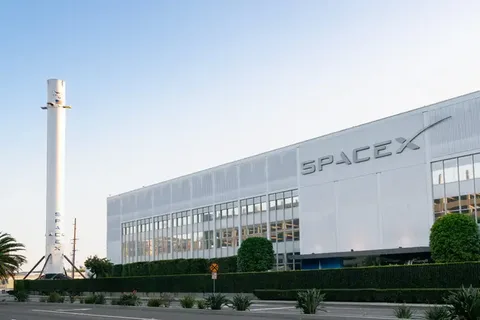
SpaceX could file publicly for its long-awaited IPO at any moment, and the offering is expected to be historic for markets. The blockbuster IPO could raise $75 billion and value Elon Musk's company at up to $2 trillion, easily making it the largest public offering ever. As investors prepare for the landmark IPO, here's what market experts and investing pros say they should expect and how they should be thinking about the business, its component parts, and the big considerations for the future. What's driving such a high valuation? Musk wants to use SpaceX to set up a Mars colony. A $75 billion capital raise and $2 trillion valuation would make SpaceX's IPO the largest ever, vaulting it past Saudi Aramco, which raised $29.4 billion, and Alibaba, which raised $25 billion. The pricing of the historic IPO and the company's massive expected valuation have been a sticking point heading into the filing. The bullish view ARK Invest, run by famed tech investor Cathie Wood, holds a stake SpaceX, and addressed the company's mega valuation in a note to investors in April. In short, Wood says the valuation is justified if the narrative pieces underpinning the company's future all fit together as expected. "The valuation reflects a specific set of assumptions about the future, not the present," the firm said. "The valuation reflects not what SpaceX earns today but what investors believe SpaceX will become, which requires understanding the company's individual business segments." A valuation approaching $2 trillion would mean there likely isn't a good comparison to other stocks trading in the market, with Wood noting that it sees future assumptions as the main driver of the company's monumental expected market cap. The bearish take Others aren't as sure. "The valuation isn't really supported by the fundamentals," David Wagner, Aptus Capital Advisors' head of equity, said, adding that, even in the event that everything goes right in the coming years, SpaceX's potential valuation would be a major outlier among the top companies in the US. The portfolio manager examined the company's 2040 revenue estimates in the context of a $2 trillion IPO valuation. "Even after baking in 14 years of growth, SpaceX is vastly more expensive than the top 6 most valuable US public companies are today." "We struggle to get on board with that, no matter the potential behind a company," Wagner noted. More than a rocket company Since the upcoming blockbuster IPO's huge valuation is built on excitement for the future, investors wanting to buy SpaceX stock at its debut might wonder what exactly investing in the company now means. ARK Invest named Starlink and launch services, as well as xAI and orbital compute, as the company's main business segments. Starlink is "the financial engine" Starlink provides internet connectivity in remote places. AIX Starlink is SpaceX's satellite internet business, which ARK Invest described as "the financial engine" of the company. "ARK's research has long identified Starlink as the fastest-growing telecom network in the world by customer and revenue onboarding, a view that has proven conservative," the firm said. "The satellite connectivity market opportunity alone could approach $160 billion annually at scale, and Starlink is structurally positioned to capture a disproportionate share," it added. "Starlink is the revenue layer that makes the entire SpaceX vision viable," Mike Alves, VIDA VC, another early SpaceX investor, told Business Insider. "It generates the majority of cash flow today and funds capital-intensive initiatives like Starship and future infrastructure," he said. The business presents an internet infrastructure that offers the company strategic geopolitical relevance. Launch services are "the foundation" A SpaceX Falcon 9 rocket takes off. Manuel Mazzanti/NurPhoto via Getty Images The company's launch services segment is likely what you think of when you hear SpaceX. SpaceX completed 165 orbital launches in 2025 and has deployed roughly 85% of all spacecraft launched to date, according to ARK Invest. "ARK's research suggests that the company has reduced launch costs by ~95% since 2008—from roughly $15,600 per kilogram to under $1,000 per kilogram via Falcon 9." They added, "A fully reusable Starship, targeting sub-$100 per kilogram, would represent another order-of-magnitude cost decline and unlock addressable markets that do not yet exist." The orbital launch business, specifically the reusable rocket component and the competitive moat offered by the company's initial leadership, is a key part of VIDA VC's Mike Alves' investment thesis for SpaceX. "At its core, you're buying into Starlink as the primary revenue engine today, layered with optionality across satellite infrastructure, launch, and future space-based systems," he said. Orbital compute and xAI SpaceX's long-term goal is Mars, but before that, it has eyes on the moon. Reginald Mathalone/NurPhoto via Getty Images Infrastructure in space might be the most theoretical and sci-fi sounding piece of SpaceX's business, but some investing pros believes the potential is there. SpaceX acquired xAI, Elon Musk's AI company, earlier this year. The xAI merger marked a consolidation of Musk-run companies and SpaceX's AI ambitions. Orbital compute — aka data centers in space — could be a major growth leg for SpaceX at a time when AI is fueling massive demand for it. "The xAI merger and orbital compute represent the most forward-looking dimension of the valuation," ARK Invest said, noting that its research suggests that orbital data centers could deliver compute at an approximately 25% lower price than on-Earth alternatives. No, probable case (~50th percentile guess) is reaching an annualized rate of 100GW/year of space AI satellites launched from Earth in 3 to 4 years. 100TW/year requires manufacturing satellites on the Moon at massive scale that are shot into deep space with a mass driver, which... — Elon Musk (@elonmusk) January 22, 2026 Musk has laid out the company's goal of launching 100 gigawatts of AI compute capacity per year starting in three to four years. Not everyone is convinced. Some analysts have questioned the economics, while OpenAI CEO and Musk rival Sam Altman has called the plan "ridiculous."
Source: Business Insider