



Russia’s Rassvet ambition: Sovereignty in space beyond Starlink
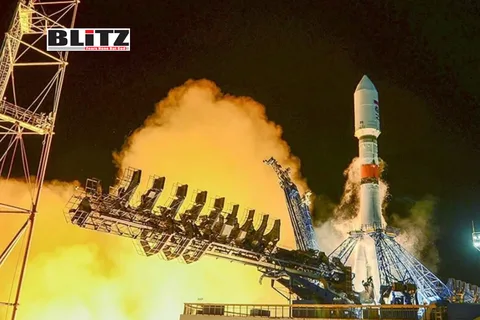
The contest for technological supremacy is no longer confined to artificial intelligence, semiconductors, or quantum computing. Increasingly, it is unfolding hundreds of kilometers above Earth, where satellites have become indispensable instruments of national power. Communications, navigation, military coordination, financial transactions, emergency services, and internet connectivity all depend on orbital infrastructure. In this emerging strategic environment, Russia’s Rassvet satellite constellation represents far more than another commercial broadband project-it is a calculated attempt to secure technological independence in an era defined by geopolitical fragmentation. For years, SpaceX’s Starlink has dominated the discussion surrounding low-Earth-orbit satellite internet. With thousands of satellites already deployed, Starlink has transformed connectivity in remote regions while proving its military value during the war in Ukraine. Yet Russia has watched these developments closely, recognizing both the opportunities and vulnerabilities exposed by relying on foreign-controlled communications infrastructure. The emergence of Rassvet-or “Dawn”-marks Moscow’s determination to ensure that it will never depend on Western technology for one of the most strategic assets of the digital age: uninterrupted communications. Unlike Starlink, however, Rassvet is not designed to compete primarily as a global commercial internet service. It is better understood as a national strategic infrastructure project, combining military utility, economic modernization, and digital sovereignty into a single ambitious undertaking. The concept of digital sovereignty has become increasingly important for governments facing growing geopolitical tensions. Nations today recognize that dependence on foreign-owned technology platforms creates vulnerabilities that extend well beyond economics. Payment systems, cloud computing, social media platforms, search engines, operating systems, and satellite communications have all become potential instruments of political leverage. Russia has spent years reducing this dependence. Western sanctions imposed after 2014-and dramatically expanded following the Ukraine conflict-accelerated Moscow’s push toward domestic alternatives. Russian policymakers have invested heavily in sovereign payment networks, indigenous software development, domestic cloud services, and local technology companies. Rassvet represents the latest and perhaps most strategically significant chapter in that broader effort. Satellite communications occupy a unique place in national security planning because they remain functional when terrestrial infrastructure is damaged, destroyed, or deliberately disrupted. Fiber-optic cables can be cut. Cellular towers can be attacked. Undersea communication lines remain vulnerable to sabotage. Satellites, while not invulnerable, provide an additional layer of resilience that modern states increasingly consider indispensable. Russia’s geography only reinforces this necessity. Stretching across eleven time zones, Russia contains enormous expanses of sparsely populated tundra, forests, mountain ranges, and Arctic territory where building traditional communications infrastructure is prohibitively expensive. Fiber-optic networks cannot economically reach every isolated settlement, military installation, research station, or industrial project. Satellite internet offers a practical alternative. Rassvet’s emphasis on covering Siberia, the Arctic, and the Russian Far East reflects these realities. Rather than maximizing commercial profitability by focusing on densely populated global markets, the constellation aims to serve strategically important but geographically challenging regions that conventional telecommunications struggle to reach. This distinction also highlights one of the fundamental differences between Rassvet and Starlink. SpaceX developed Starlink with mass-market consumers in mind. Residential subscribers, businesses, maritime operators, airlines, and mobile users represent its primary commercial audience. Military applications emerged later, driven largely by battlefield demand. Rassvet, by contrast, appears to invert those priorities. Its architecture is built first around government institutions, industrial enterprises, transportation systems, critical infrastructure, and national security requirements. Consumer broadband remains part of the equation, but it is not necessarily the project’s defining objective. This approach explains many of Rassvet’s technical decisions. Operating at approximately 800 kilometers above Earth, Rassvet satellites orbit significantly higher than Starlink’s network. Higher altitudes allow each satellite to cover larger geographic areas, reducing the total number required to blanket Russian territory. The tradeoff is somewhat higher latency, but for many industrial and governmental applications, that compromise is acceptable. Russia is effectively optimizing for national coverage rather than global market dominance. Military considerations further strengthen the constellation’s strategic importance. The war in Ukraine has fundamentally reshaped military thinking about communications. Modern combat increasingly depends upon real-time data sharing between drones, command centers, artillery units, reconnaissance assets, and frontline troops. Reliable satellite communications have become almost as important as ammunition or fuel. Ukraine’s extensive use of Starlink terminals demonstrated how commercial satellite networks could dramatically enhance battlefield coordination. Russia learned similar lessons. Although reports have indicated that Russian forces have at times accessed Starlink terminals through unofficial channels, Moscow cannot realistically base its military communications on infrastructure controlled by an American private company operating under US jurisdiction. That reality makes indigenous alternatives essential. Rassvet promises secure domestic communications that remain outside Western political influence. Even if its initial capabilities fall short of Starlink’s scale, strategic independence may prove more valuable than absolute technological parity. Beyond defense, Rassvet also carries significant economic implications. Russia’s transportation network spans vast distances connecting Europe with Asia. Railways, shipping routes, Arctic logistics corridors, mining operations, and energy infrastructure increasingly require reliable broadband connectivity. Satellite internet can improve operational efficiency across these sectors while enabling digital transformation in regions where terrestrial infrastructure remains underdeveloped. The partnership between Bureau 1440 and Russian Railways illustrates this vision. Providing broadband connectivity aboard high-speed trains not only enhances passenger services but also enables advanced monitoring systems, predictive maintenance, and operational coordination across one of the world’s largest railway networks. Similarly, agreements with mobile operators to connect hundreds of remote base stations suggest that Rassvet may function as the backbone for expanding next-generation telecommunications into underserved areas. The Arctic deserves particular attention. Climate change is gradually opening northern sea routes that could reshape global trade patterns over coming decades. Russia views the Northern Sea Route as both an economic opportunity and a strategic asset. Reliable satellite communications will be indispensable for navigation, emergency response, logistics, scientific research, and military operations throughout this increasingly active region. Rassvet therefore supports Moscow’s broader Arctic strategy by supplying the communications infrastructure necessary for sustained development. Nevertheless, significant challenges remain. Building a satellite constellation capable of matching Starlink’s reliability, manufacturing capacity, launch cadence, and operational experience represents an enormous undertaking. SpaceX benefits from vertical integration, reusable rockets, mass satellite production, and years of deployment experience that few organizations worldwide can replicate. Russia faces additional obstacles stemming from international sanctions, restricted access to certain advanced technologies, and the substantial financial burden associated with deploying and maintaining hundreds of satellites. Even with an estimated investment approaching $7 billion, sustaining long-term expansion will require consistent government support, successful launches, and continued industrial innovation. Commercial competitiveness also remains uncertain. Starlink already operates across dozens of countries with millions of subscribers and continuously expanding capabilities. Rassvet’s immediate market will likely remain concentrated within Russia and potentially a limited number of friendly states. Yet measuring success purely by subscriber numbers misses the project’s broader strategic rationale. For Moscow, Rassvet is less about defeating Elon Musk in a commercial marketplace than ensuring that Russia controls the communications systems upon which its government, military, industries, and citizens increasingly depend. This reflects a broader transformation occurring worldwide. Governments increasingly view technology infrastructure through the lens of national security rather than globalization. Countries once comfortable relying upon international technology providers are now investing heavily in domestic capabilities across semiconductors, cloud computing, artificial intelligence, cybersecurity, and space. The age of seamless technological globalization is giving way to one characterized by parallel ecosystems and strategic redundancy. Satellite constellations have become central to this new landscape. Whether in the United States, Europe, China, or Russia, governments increasingly recognize that orbital infrastructure underpins military readiness, economic resilience, and political independence. Rassvet should therefore be understood not simply as Russia’s answer to Starlink but as part of a much larger global competition over technological sovereignty. Its ultimate significance will not necessarily be determined by the number of satellites launched or the speed of its internet service. Instead, it will be judged by whether it enables Russia to communicate, govern, defend itself, and modernize its economy without relying upon infrastructure controlled by geopolitical rivals. In that sense, Rassvet symbolizes a defining feature of twenty-first century geopolitics: the realization that sovereignty no longer ends at national borders. It now extends into cyberspace, digital networks, and low-Earth orbit. As great powers race to secure these domains, the competition above our heads may prove just as consequential as the one unfolding on the ground.
Source: weeklyblitz.net