



Apple Is Swapping The Faster TLC For Slower QLC Storage In iPhone 18 Pro Duo’s 1TB And 2TB Models, While Charging Sky-High Prices
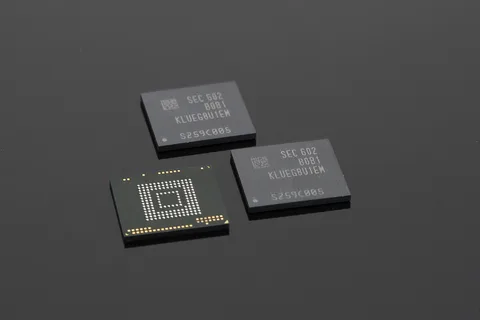
Apple is expected to materially increase the price of the upcoming iPhone 18 Pro and Pro Max. Even so, it is stealthily downgrading the higher storage variants of its upcoming Pro duo, especially when it comes to the flash storage, increasing the relative attractiveness of the 256GB and 512GB storage variants. Apple is reportedly downgrading the NAND flash storage in the 1TB and 2TB variants of the upcoming iPhone 18 Pro but the higher capacity parts get cost cutted - 1TB : Now use BC8Q-1T as the main supplied drive, which is a QLC NAND from SKHynix. But Apple also have Samsung 3DV8 1TB TLC as a rare alternative. Imagine buying an iPhone 18 Pro/Max 1TB and getting a slower drive, oh god. 2/3 — Reptalica (@Reptalicant) July 2, 2026 According to the tipster Reptalica, the 256GB and 512GB variants of the iPhone 18 Pro and Pro Max use TLC NAND that has been sourced from SK hynix, Kioxia, and SanDisk. For the benefit of those who might not be aware, Triple-Level Cell (TLC) NAND stores three bits of data per cell, and typically entails faster and more consistent write speeds, while offering higher durability than its Quad-Level Cell (QLC) NAND counterpart, but comes with a higher cost. For the 1TB variant of the iPhone 18 Pro duo, Apple is primarily using the BC8Q-1T, a QLC NAND from SK hynix, with Samsung's 3DV8 1TB TLC NAND interspersed as a "rare alternative." This is a stealth downgrade, especially as QLC NAND typically entails more erratic and slower write speeds. But things get worse for the 2TB variants. Here, Apple is using SK hynix's BC8Q-2T QLC NAND, which is an "enterprise-only design," where "random 4K performance [is] gonna be terrible." Do note that the 2TB variant of the iPhone 17 Pro Max uses a TLC NAND, which is exactly how things should be, given the variant's premium credentials. As to why Apple might be opting for this stealth downgrade, look no further than cost calculations. We reported recently that the flash storage costs on the 256GB iPhone 18 Pro will rise to $51/unit from just $13/unit for the comparable iPhone 17 Pro variant. Even so, with the base iPhone 18 Pro and Pro Max now expected to retail for $1,399 and $1,499, respectively, we find no logical rationale behind these stealth downgrades other than Apple's desire to maintain its sky-high margins.
Source: Wccftech