



Canadian robotics firm bets on MH3 humanoid to ease factory labor shortages
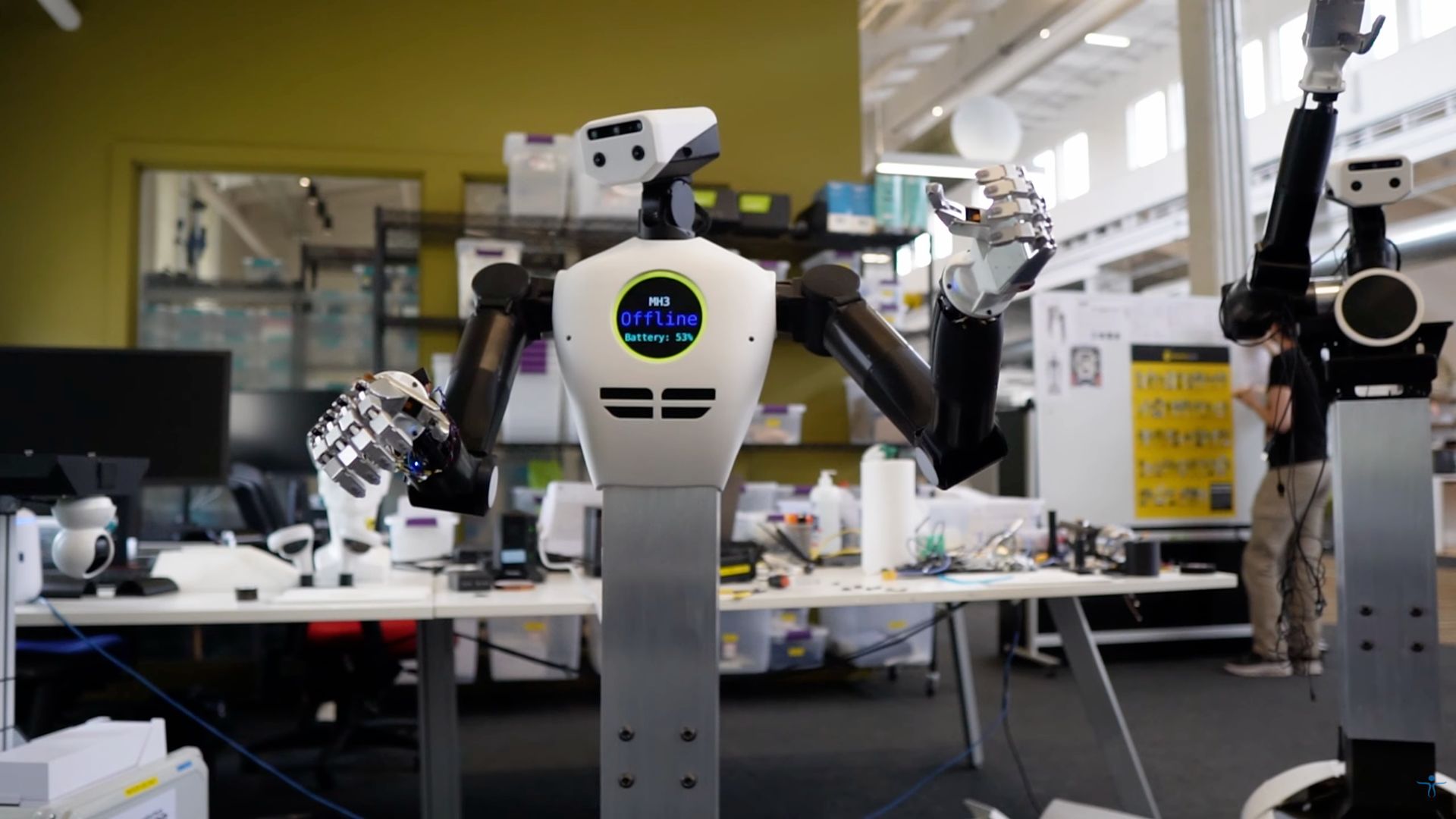
MH3 is aimed to extend human expertise into hazardous and remote environments through teleoperation and AI. Misree Robotics/YouTube Canadian firm Mirsee Robotics is developing its third-generation humanoid robot, the MH3, to automate physically demanding and hazardous industrial tasks in manufacturing. Built on a wheeled mobile platform, the robot is designed to take over work that the company says is unsafe or excessively strenuous for human workers. The startup plans to begin mass production in 2027, aiming to manufacture thousands of units over the next three years as it expands deployment across industrial workplaces facing labor shortages and safety challenges. Recently, US-based Weave Robotics has introduced Isaac 1, a wheeled mobile household robot designed to automate everyday chores, including tidying rooms, doing laundry, and other routine domestic tasks. Industrial automation advances Mirsee is advancing the development of its third-generation humanoid robot, the MH3, as it prepares to bring the platform into large-scale commercial production for industrial applications. The Cambridge, Ontario, startup has already built eight MH3 prototypes, which are currently undergoing testing and validation. Once the evaluation process is complete, the company plans to scale production to thousands of units over the next three years, targeting manufacturers seeking to automate physically demanding and hazardous work. According to the company, the MH3 has been designed to perform work that is unsafe, repetitive, or physically exhausting for human workers. Compared with its previous humanoid platforms, the new model delivers significant improvements in mobility, payload capacity, endurance, and dexterity. The wheeled humanoid robot can lift to 66 pounds (30 kilograms) with each arm, operate for up to 10 hours on a single charge, and features 31 degrees of freedom that enable human-like arm and hand movements. These upgrades are intended to improve the robot’s ability to manipulate tools, handle materials, and work efficiently in factory environments. For specialized operations, the MH3 can be remotely operated from distances of up to 1,500 kilometres using a virtual reality headset and motion-tracking gloves. The VR headset provides a live 3D video feed from the robot’s onboard cameras, while the gloves capture the operator’s hand movements, allowing the robot to replicate them in real time. According to Misree, teleoperation capability enables the MH3 to perform tasks in hazardous or hard-to-access environments, such as remote water treatment facilities and other industrial sites where human access is difficult or unsafe. Future ready robotics The MH3 is supported by a range of proprietary technologies developed in-house as part of Mirsee’s vertically integrated robotics approach. One of its core technologies is the Hadron Vision System, an embedded stereo vision platform powered by NVIDIA Jetson processors and custom-designed stereo cameras. The system provides high-performance 3D perception while maintaining low power consumption, enabling robots to detect and interact with complex environments more accurately. For mobility, Mirsee has developed its Advanced Mobile Platform (AMP), which uses Mecanum wheels to provide holonomic movement. This allows the robot to move in any direction without changing its orientation, improving maneuverability in confined industrial spaces. The platform also incorporates integrated suspension and supports payloads exceeding 661 pounds (300 kilograms), while alternative differential-drive configurations are available for rough outdoor terrain. Beyond industrial robotics, Mirsee has developed several supporting technologies, including patented M-Drive actuators for high-precision motion and haptic feedback, modular hot-swappable battery systems, advanced motor and system management controllers, power distribution systems, custom mechanical assemblies, and ultra-low-latency video transmission architecture. The company has also collaborated with Stanford University to develop MRI-safe surgical robots made entirely from plastic using its hybrid hydrostatic actuator technology.
Source: Interesting Engineering