



How Modern Society is Redefining Masculinity & What It Means for Men Today
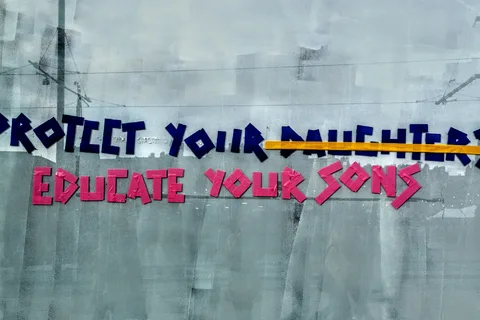
Picture this: a young boy comes home from school, excited to tell his dad about the football tryouts next week. But instead of encouragement, he's told that sports are too violent & he should focus on his grades instead. Fast forward twenty years, & this same boy struggles to understand what it means to be a man in today's world. This scenario isn't uncommon—it's happening everywhere, every day. We're living in an era where traditional masculine traits are being questioned, criticized, & sometimes completely dismissed. The conversation around masculinity has become one of the most heated debates of our time. Some argue that we're witnessing the necessary evolution of outdated gender roles. Others believe we're seeing the systematic breakdown of fundamental masculine qualities that have shaped societies for thousands of years. But what's really happening? Are we helping men become better versions of themselves, or are we accidentally taking away essential parts of what makes them who they are? This article explores the complex landscape of modern masculinity. We'll look at how societal changes have affected men's roles in families, workplaces, & communities. We'll examine the psychological impact of these shifts & discuss whether current trends are helping or hurting men's mental health & overall well-being. Most importantly, we'll try to understand what healthy masculinity looks like in the 21st century. The Changing Definition of STRENGTH For generations, physical strength & emotional stoicism were the hallmarks of masculinity. Men were expected to be the protectors, the providers, & the problem-solvers. They fixed broken things, opened jars, & never cried in public. This traditional model created clear expectations that many men found comforting, even if limiting. They knew their role & understood how to fulfill societal expectations. Today's world tells a different story. Physical strength matters less when most jobs involve computers rather than construction. Emotional intelligence is valued over emotional suppression. Men are encouraged to express their feelings, seek therapy, & embrace vulnerability. These changes aren't necessarily bad—they've helped many men develop deeper relationships & better mental health. However, the shift has left some men feeling confused about their identity & purpose. The problem isn't that men are becoming more emotionally aware. The issue arises when society suggests that traditional masculine traits are inherently toxic or harmful. When boys are told that competitiveness is destructive, that leadership is aggressive, or that wanting to protect others is controlling, they receive mixed messages about their natural instincts. This creates internal conflict that can lead to anxiety, depression, & a sense of purposelessness. Consider the workplace dynamics of today. Men who display assertiveness might be labeled as aggressive, while those who step back might be seen as weak or uncommitted. It's a no-win situation that leaves many men walking on eggshells, unsure how to navigate professional relationships. The result is often a watering down of natural leadership qualities rather than their healthy expression. The EDUCATION System & Its Impact Schools have become testing grounds for new approaches to masculinity, & the results are mixed at best. Many educational institutions have implemented policies that discourage competitive activities, eliminate physical play, & emphasize collaboration over individual achievement. While these changes aim to create more inclusive environments, they often overlook how boys naturally learn & develop. Research consistently shows that boys & girls have different learning styles & developmental needs. Boys typically require more physical activity, respond well to competition, & benefit from clear hierarchies & rules. When schools eliminate these elements in favor of one-size-fits-all approaches, boys often struggle academically & socially. The statistics speak for themselves: boys are falling behind in reading, graduating at lower rates, & experiencing higher rates of behavioral problems. The absence of male role models in education compounds these challenges. With fewer than 25% of elementary teachers being men, many boys lack positive masculine figures during crucial developmental years. Female teachers, despite their best intentions, cannot provide the same modeling of healthy masculinity that boys need to understand their identity. This gap leaves boys to figure out manhood on their own, often turning to media, peers, or online influences that may not offer the best guidance. Additionally, zero-tolerance policies in schools often penalize natural boyish behavior. Roughhousing, which helps boys learn boundaries & develop social skills, becomes grounds for suspension. Competitive games are banned for being too aggressive. These policies, while well-intentioned, can make boys feel that their natural instincts are wrong or dangerous, leading to shame & confusion about their identity. Media Representation & CULTURAL Messages Turn on any TV show or movie today, & you'll likely see men portrayed as bumbling fathers, incompetent husbands, or dangerous villains. The strong, wise, protective father figure that once dominated media has largely disappeared, replaced by characters who provide comic relief through their failures. This shift in representation has profound effects on how both men & women view masculinity. Young boys growing up with these images internalize the message that men are inherently flawed, that fathers are unnecessary, & that masculine traits are sources of problems rather than solutions. Meanwhile, girls develop expectations that they'll need to take charge in relationships because men simply can't be trusted with important decisions. These stereotypes create relationship dynamics that can be frustrating & unfulfilling for everyone involved. Social media amplifies these messages exponentially. Platforms are filled with content celebrating the failure of men while promoting the idea that masculine traits are toxic. Terms like "toxic masculinity" have become so overused that they're applied to virtually any expression of traditional male behavior. Men who work long hours to provide for their families are called absent fathers. Those who want to lead are labeled controlling. Men who express attraction are deemed predatory. The constant barrage of negative messaging takes a psychological toll. Many men report feeling like they're walking through a minefield, never knowing when normal behavior might be criticized or misinterpreted. This hypervigilance is exhausting & can lead to social withdrawal, relationship problems, & mental health issues. When men feel they can't be themselves without facing criticism, they often choose isolation over authentic connection. The WORKPLACE Dilemma Modern workplaces present unique challenges for men trying to navigate changing expectations. Traditional masculine traits like assertiveness, competitiveness, & leadership drive were once celebrated in professional settings. Today, these same qualities are often viewed with suspicion or labeled as problematic. Men find themselves in a constant balancing act, trying to be effective leaders without appearing too aggressive or dominant. Mentorship has become particularly complicated. Many experienced men hesitate to mentor younger employees, especially women, for fear of misinterpretation or false accusations. This reluctance, while understandable from a self-preservation standpoint, deprives both mentors & mentees of valuable professional development opportunities. The ripple effect extends throughout organizations, limiting collaboration & knowledge transfer. The emphasis on work-life balance, while positive in many ways, can create additional pressure for men who derive significant identity & satisfaction from their careers. Men who work long hours or prioritize professional advancement may be criticized for having misplaced priorities, even if their families support & benefit from their dedication. This judgment can create guilt & confusion about how to balance personal fulfillment with family responsibilities. Furthermore, diversity & inclusion initiatives, though necessary & beneficial overall, sometimes inadvertently marginalize men, particularly those from majority backgrounds. When advancement opportunities are explicitly limited for certain groups, it can create resentment & disengagement. The key is finding ways to create opportunities for everyone without making any group feel excluded or devalued. Mental Health & EMOTIONAL Consequences The psychological impact of these societal changes cannot be overstated. Men's mental health statistics paint a troubling picture: higher suicide rates, increased substance abuse, & growing rates of depression & anxiety. While multiple factors contribute to these trends, the confusion around masculine identity plays a significant role. When men feel they can't express their authentic selves, the psychological pressure builds until it finds unhealthy outlets. Traditional masculine coping mechanisms—like physical activity, friendly competition, & problem-solving—are often discouraged or unavailable in modern society. Men who might have once worked through stress by playing sports, building something with their hands, or engaging in good-natured rivalry now find themselves in environments where these outlets are limited or criticized. Without healthy ways to process emotions & stress, many men turn to destructive alternatives. The pressure to be emotionally open & vulnerable, while positive in principle, can backfire when men feel forced into it. Authentic vulnerability comes from a place of strength & choice, not from societal pressure or mandate. When men feel they must share emotions they're not ready to express, it can increase anxiety & create artificial interactions that don't provide real relief or connection. Additionally, the lack of male-only spaces & activities has removed important sources of emotional support & identity formation. Men's clubs, sports teams, & other traditionally masculine environments provided opportunities for men to connect, share experiences, & learn from each other. As these spaces disappear or become gender-neutral, men lose valuable sources of community & belonging that can't easily be replaced. Finding Balance: The Path FORWARD The solution to these challenges isn't to return to rigid traditional roles or dismiss the positive changes that have occurred. Instead, we need to find ways to honor healthy masculine traits while eliminating genuinely harmful behaviors. This requires nuanced thinking that recognizes the difference between toxic behavior & natural masculine expression. Healthy masculinity includes traits like protectiveness without possessiveness, strength without aggression, & leadership without domination. Men can be competitive while still being fair, assertive while remaining respectful, & emotionally strong while showing appropriate vulnerability. The goal should be to channel masculine energy in positive directions rather than suppressing it entirely. Educational systems need to recognize & accommodate different learning styles & developmental needs. This might include more male teachers, opportunities for physical activity, competitive elements in learning, & recognition that boys & girls often thrive in different environments. Rather than eliminating competition, schools can teach healthy competition that builds character & resilience. Workplaces can benefit from embracing diverse leadership styles & recognizing that different approaches work for different situations. Sometimes assertive, decisive leadership is exactly what's needed. Other times, collaborative, consensus-building approaches work better. The key is having leaders who can adapt their style to the situation while remaining authentic to their personality & strengths. CONCLUSION: Embracing Authentic Masculinity The conversation around masculinity doesn't have to be a zero-sum game where one group wins while another loses. Men can evolve & grow while still maintaining their essential masculine qualities. Women can be strong & independent while still appreciating & supporting healthy masculine traits in their partners, friends, & family members. Society benefits when everyone can express their authentic selves in positive ways. Moving forward requires honest dialogue that acknowledges both the problems with some traditional masculine expressions & the value of many masculine traits. We need to distinguish between toxic behaviors that harm others & natural masculine tendencies that, when expressed healthily, benefit everyone. This means supporting men who want to be providers while not requiring all men to fill that role. It means celebrating men who choose to be nurturing caregivers while respecting those who express care through protection & provision. The goal should be creating a society where men feel free to express their authentic selves in positive ways, where boys can grow up with clear, healthy models of masculinity, & where masculine traits are valued alongside feminine qualities. This isn't about returning to the past or maintaining the status quo—it's about moving forward in a way that honors the full spectrum of human nature & potential. What kind of men do we want in our society? Do we want men who are confident, protective, & strong? Or do we want men who are constantly second-guessing themselves & apologizing for their nature? The choice is ours, & the time to make it consciously & deliberately is now.
Source: vocal.media