



Lenovo Yoga Slim 7x Hits $999 at Best Buy: OLED Copilot+ PC at Record Low
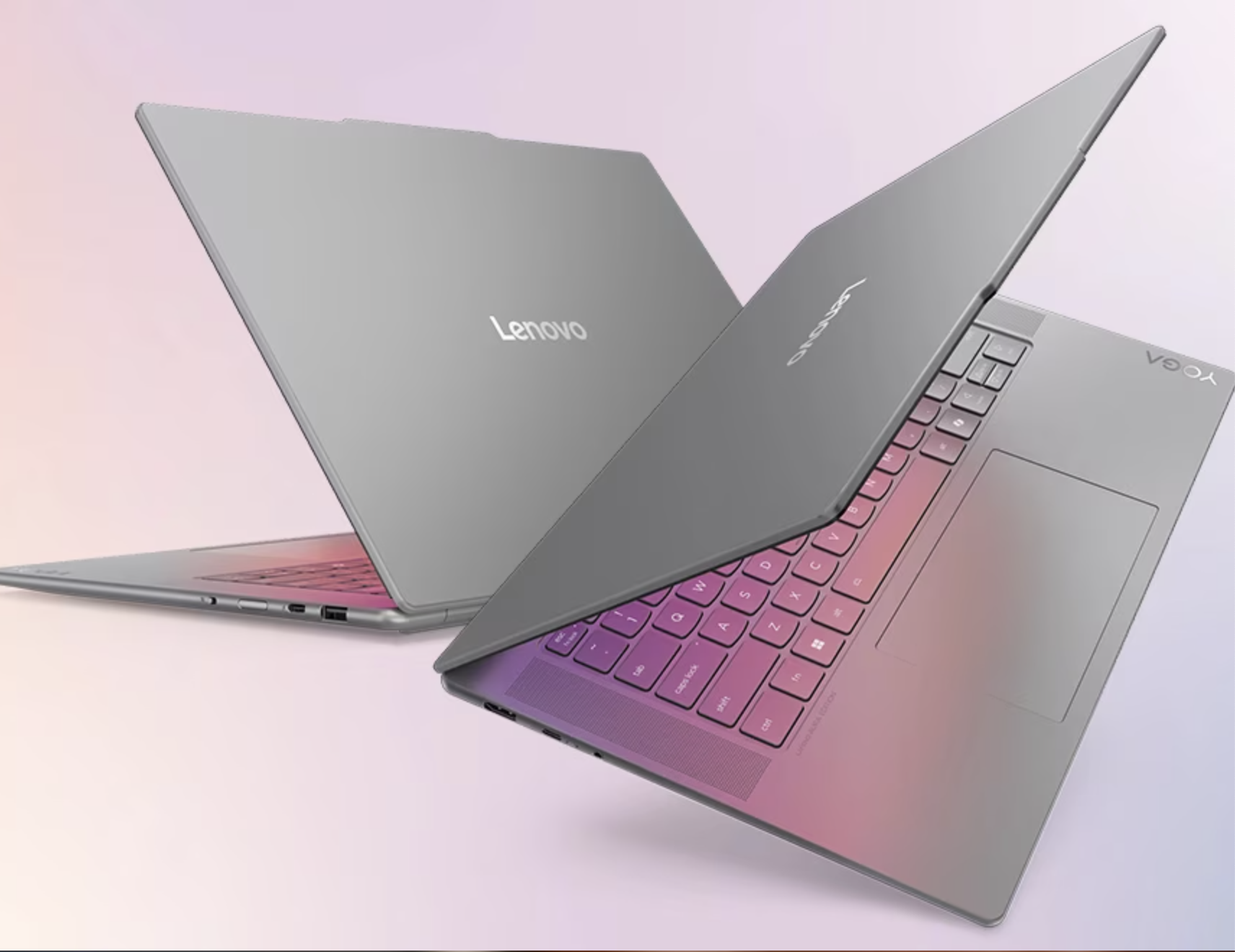
Best Buy's 4th of July sale, which runs through Sunday, July 5, has pushed the 2026 Lenovo Yoga Slim 7x — powered by Qualcomm's Snapdragon X2 Plus chip with a 2K OLED touchscreen — to $999.99, down from its standard $1,200 retail price and the lowest price ever recorded for this configuration. For buyers who have been watching OLED Copilot+ PC prices, this is the window deal trackers have been waiting for. The sale carries limited quantities, no rainchecks, and a hard deadline: it ends when stores close Sunday night. This is a time-bounded decision with specific technical and legal considerations worth understanding before checkout. The hardware case is strong. The data-sharing obligations are real. Both belong in the same purchase decision. What Is on Sale and What It Costs The discounted configuration is the Snapdragon X2 Plus model — Qualcomm's second-tier chip in the X2 series — paired with 16GB of LPDDR5x RAM, a 512GB SSD, a 14-inch 2K (1920x1200) OLED touchscreen, Wi-Fi 7, and three USB-C ports. The regular price is $1,200; the sale price is $999.99 — a $200 reduction, confirmed as the lowest price this specific configuration has reached since launch. The broader Best Buy 4th of July sale also includes discounts of up to 45% off on select televisions and major appliances, with simultaneous deals on competing ultrabooks from HP, Acer, and Samsung. The Yoga Slim 7x's OLED panel is the differentiator that separates it from most of those alternatives at comparable prices. Why OLED at $999 Is Technically Significant Most laptops in the $900–$1,100 range use IPS LCD panels. That is not a marketing tier distinction — it is a fundamental difference in display architecture. An IPS LCD generates images by backlighting a layer of liquid crystals; the backlight is always on, and black pixels are produced by blocking light rather than turning it off. An OLED panel eliminates the backlight entirely. Each pixel contains organic compounds that emit their own light directly when current passes through them. When a pixel should be black, it switches off completely, drawing zero power and producing zero light output. The consequence is a contrast ratio that IPS LCD panels cannot match. A typical IPS panel achieves contrast ratios in the range of 1,000:1; OLED panels deliver contrast measured in the millions-to-one range on the same hardware. For creative work, video editing, and film consumption, this difference is visible at a glance. For all-day productivity use, the benefit is measurable: OLED panels reduce power draw for content with significant dark areas, because off-pixels consume no energy. The reason OLED is appearing at $999 in a mainstream ultrabook in 2026 — when two years ago it was effectively confined to devices above $1,300 — is supply-side maturation. Samsung Display and LG Display have both scaled their small-to-midsize OLED production substantially, driving panel costs down to the point where manufacturers can include OLED in midrange configurations without pricing themselves out of the market. How the Snapdragon X2 Plus Differs From the X2 Elite The Yoga Slim 7x line spans multiple chip configurations. The $999.99 sale unit uses the Snapdragon X2 Plus — not the Snapdragon X2 Elite that powers higher-priced configurations. The distinction is worth understanding before purchasing. Both chips are built on TSMC's 3nm N3P process node, use Qualcomm's third-generation Oryon CPU architecture, and share the same Hexagon NPU rated at 80 TOPS (tera operations per second, measured at INT8 precision). That 80 TOPS NPU is the same across both product families, meaning both chips clear Microsoft's 40 TOPS Copilot+ PC certification requirement by a factor of two. Where they diverge is in CPU core count, peak clock speed, and cache. According to Windows Central's CES 2026 coverage, the 10-core X2 Plus variant peaks at 4.0GHz and carries 34MB of cache; the X2 Elite's 12-core base configuration peaks at 4.7GHz. Tom's Hardware reports that Qualcomm's data positions the X2 Plus at up to 35% faster single-core performance than the first-generation Snapdragon X Plus. The X2 Plus also supports up to 128GB of LPDDR5x memory at up to 9,523 megatransfers per second over a 128-bit bus — the same memory architecture as the X2 Elite, though this unit ships with 16GB. For productivity workloads — writing, browser-based applications, light photo editing, video calls — the gap between the X2 Plus and X2 Elite is unlikely to register in daily use. The NPU performance is identical for Copilot+ AI features. The difference matters in sustained multithreaded loads: rendering, compilation, video export. Buyers whose primary work includes those tasks should consider X2 Elite configurations at higher price points. What the 16GB RAM Ceiling Means for Copilot+ AI Features The $999.99 unit ships with 16GB of RAM — exactly the minimum that Microsoft requires for Copilot+ PC certification. The Hexagon NPU's 80 TOPS rating means the chip can run Copilot+ features without CPU or GPU involvement — live captions, background segmentation, Windows Recall indexing, and Click to Do all run on the NPU independently. What 16GB does constrain is on-device AI inference for larger models. Windows Recall, which stores and indexes encrypted screenshots of everything on screen, accumulates local storage and memory use over time. Users who enable multiple simultaneous Copilot+ features while running memory-intensive applications — large browser sessions, video editing software, multiple virtual machines — will notice memory pressure at 16GB in ways they would not at 32GB. The RAM is soldered and non-upgradeable. The 16GB that ships at checkout is the ceiling for the life of the device. For most home productivity users and students — the primary audience for a $999 ultrabook — 16GB is workable. For buyers who plan to run heavy creative applications alongside AI features, or who expect to use this machine as their primary device for three to four years, X2 Elite configurations with 32GB deserve consideration at their current pricing. What Chinese Law Requires Lenovo to Do With Your Data Lenovo Group Limited is headquartered in Beijing. As a company subject to Chinese jurisdiction, it operates under three statutes that impose intelligence cooperation obligations. China's National Intelligence Law (2017), Article 7, requires all organizations and citizens to support, assist, and cooperate with state intelligence work. China's Data Security Law (2021) mandates cooperation with government data access requests. China's Cybersecurity Law (2017) requires network operators — including device manufacturers with networked products — to provide technical cooperation with government agencies on demand. These are fixed legal conditions that apply regardless of where a Lenovo device is purchased, where the company's servers are located, or what its privacy policy states. A class-action lawsuit filed in the United States in February 2026 alleges that Lenovo's pre-installed software transferred hardware configuration, application usage patterns, browsing history, device identifiers, and geolocation data to Chinese-linked infrastructure, potentially in violation of the Department of Justice's Bulk Data Transfer Rule, which took effect in April 2025. Lenovo has not made public statements specifically addressing that lawsuit. Lenovo products have been banned or flagged by the U.S. State Department (2006), the Department of Homeland Security (2015), the Joint Chiefs of Staff Intelligence Directorate (2016), and the Department of Defense Information Network (2018). Security researchers at Binarly disclosed in July 2025 a set of firmware vulnerabilities in Lenovo Yoga devices — tracked as CVE-2025-4421 through CVE-2025-4426 — that could allow attackers with elevated access to bypass SecureBoot, deploy persistent implants that survive operating-system reinstallation, and break hypervisor isolation. Lenovo confirmed the findings and issued patches for some product lines; Yoga-specific patches were in progress as of the disclosure date. No independent third-party security audit of the 2026 Yoga Slim 7x has been published. Practical steps to limit exposure include disabling Lenovo-specific pre-installed software and telemetry, reviewing outbound network connections with a third-party monitoring tool, and network-segmenting the device in enterprise environments. None of these fully address the structural legal obligation under Chinese law. Buyers handling classified, regulated, or sensitive enterprise data should evaluate this framework before purchasing. For a full technical breakdown and complete analysis of the applicable Chinese data-sharing laws, see the earlier TechTimes coverage of this model. Where Windows on ARM Still Falls Short The Snapdragon X2 Plus is an ARM chip, and Windows on ARM has meaningful compatibility gaps that have not fully closed as of mid-2026. Native ARM applications run at full performance. Applications compiled for x86 run under Qualcomm's Prism emulation layer, which adds a 10–15% performance overhead and occasional compatibility failures for software requiring low-level hardware driver access. The Works on WOA catalog lists more than 7,000 verified applications for Windows on ARM; buyers should check their specific software before purchasing. Gaming at any meaningful fidelity is outside the scope of this machine. Kernel-level anti-cheat software — used by competitive multiplayer titles — does not run on ARM Windows. The integrated Adreno GPU handles productivity graphics and video decode efficiently but lacks the discrete graphics memory that 3D gaming at acceptable frame rates requires. The three USB-C ports are the machine's only physical I/O. USB-A peripherals, HDMI displays, SD cards, and 3.5mm headphone jacks all require a hub. Buyers who depend on physical I/O variety should factor that into the $999.99 price comparison. Is the Best Buy 4th of July Sale the Right Time to Buy? Timing is genuinely favorable. The $999.99 price is confirmed as the lowest recorded for this configuration. The sale ends Sunday night, July 5, with limited quantities and no rainchecks. Memory prices are expected to remain structurally elevated through at least 2030, according to statements by Lenovo executives at the ISC 2026 supercomputing conference in June — which means 16GB-equipped laptops at sub-$1,000 prices may become rarer as the year progresses. What makes this moment worth acting on: a 2K OLED display in a sub-1.2kg chassis at $999.99 is not a common combination in any retailer's catalog today. What makes patience worth considering: buyers who need 32GB RAM, x86 software compatibility without compromise, or strong sustained multithreaded performance will be better served by a different configuration or a different machine entirely. Verify current pricing and stock at BestBuy.com before purchasing. Prices and availability are subject to change. Frequently Asked Questions Is the Lenovo Yoga Slim 7x worth buying at $999.99? At $999.99, this is the lowest confirmed price for the Snapdragon X2 Plus configuration of the 2026 Yoga Slim 7x. The OLED display, 80 TOPS NPU, Wi-Fi 7, and sub-1.2kg chassis represent strong value at this price point. The tradeoffs are the 16GB RAM ceiling — exactly at the Copilot+ certification minimum — and the security and data-sharing obligations that apply to all Lenovo devices under Chinese law. For home productivity use, the hardware value is strong. For sensitive or enterprise data environments, the legal framework warrants evaluation before purchasing. What is the difference between the Snapdragon X2 Plus and X2 Elite? Both chips use the same TSMC 3nm process, the same Oryon CPU architecture, and the same 80 TOPS Hexagon NPU — meaning Copilot+ AI feature performance is identical. The X2 Elite offers more CPU cores, higher peak clock speeds, and more cache. In productivity and web workloads, the difference is minimal. In sustained multithreaded tasks such as video rendering or large compilation jobs, the X2 Elite holds an advantage. The X2 Plus is the chip that makes the $999.99 price point possible. Does the Lenovo Yoga Slim 7x qualify as a Copilot+ PC, and does the 16GB RAM limit AI features? Yes, the Snapdragon X2 Plus includes an 80 TOPS Hexagon NPU, which doubles Microsoft's 40 TOPS minimum for Copilot+ certification. Copilot+ features including Windows Recall, live captions, Click to Do, and AI-powered Windows search all run locally on the NPU. The 16GB RAM is sufficient to activate these features, but provides less headroom than a 32GB system for heavy multitasking alongside AI workloads — and that ceiling cannot be increased because the memory is soldered. Is Lenovo a Chinese company, and what does that mean for data privacy? Lenovo Group Limited is headquartered in Beijing. China's National Intelligence Law (2017), Article 7, requires all organizations under Chinese jurisdiction to cooperate with government intelligence requests — a legal obligation that applies regardless of where the device is sold or where the company's servers are located. A 2026 class-action lawsuit in the United States further alleges that Lenovo's pre-installed software transferred user behavioral data to Chinese-linked infrastructure. No independent security audit of the 2026 Yoga Slim 7x has been published. Buyers handling sensitive data should review these considerations before purchasing.
Source: Tech Times