



Musk sees 'widespread' Tesla Robotaxi presence in US. Here's what's needed
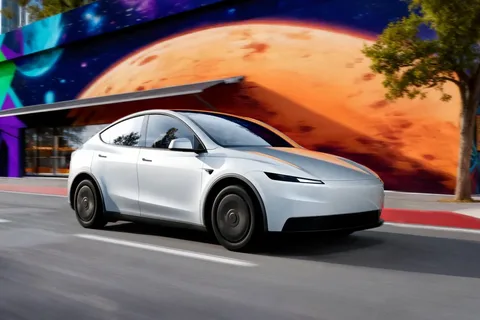
Tesla CEO Elon Musk stated the company's Robotaxi service will be widespread in the United States by the end of the year. The autonomous ride-hailing service is currently operating in limited areas of Texas and California. Wider expansion of the service requires congressional approval to increase the number of self-driving cars allowed on the road. Tesla 's Robotaxi service will be "widespread in the U.S. by the end of the year," its CEO Elon Musk told attendees at a summit in Israel on Monday, May 18. "We already have some vehicles operating with no people inside and no safety monitors in three cities in Texas and probably will be widespread in the U.S. by end of this year, and hopefully in Israel too," Musk said during a Zoom appearance at the Samson International Smart Mobility Summit in Tel Aviv. Musk told attendees at the conference "it'll be quite niche thing in 10 years to actually be driving your own car. The car will drive you." "The world's going to have a lot of robots in the future," Musk said. "What Tesla makes is effectively four-wheeled robots right now. And in the future we'll also be having humanoid robots." The comments came as Tesla announced in a recent X post that it is expanding its Robotaxi service to Dallas and Houston after an initial launch in Austin. How does Tesla's Robotaxi work? Tesla said rides in its Robotaxis can be ordered using a cell phone app similar to the ones riders use now to search for Uber and Lyft rides. "We’re bringing autonomous rides to you today—starting with Model Y," Tesla said in a post on its website. "To get started, download the Robotaxi app." Riders must create an account, and the Robotaxi app is currently only available on Apple iOS devices, the company said. Musk told attendees at the Israeli conference that riding in one of his company's cars that are operating autonomously on its Full Self Drive software is "quite magical." "The car feels like it is sentient," he said. "It actually feels like it's alive. As we improve the software, you can feel the sentience growing in the car." Musk told investors in Tesla's January earnings call that the Robotaxi will be a big part in his company's "overall shift to an autonomous future." "The only vehicles that we'll make will be autonomous vehicles, with the exception of the next generation Roadster," Musk told investors Jan. 28. Where do Tesla's Robotaxis operate? Tesla says it currently operates its Robotaxis using Model Ys in limited areas of Austin, Dallas and Houston and in parts of California. The company has previously told investors that it plans to expand the service to cities such as Phoenix, Miami, Orlando and Las Vegas. Musk told investors on the April earnings call that his company's expanded Robotaxi service will use the same software that is being used in Austin and San Francisco. "The limiting factor for expansion is really rigorous validation," Musk said. "Making sure things are completely safe. We don’t want to have a single accident or injury with the expansion of Robotaxi and we've to the credit of the team, not had a single one to date." What has to happen for Tesla's Robotaxi to be more widely available? Musk has made many promises before about his company's ability to deliver widespread autonomous driving. But Tesla has missed several of its self-imposed deadlines and safety advocates say they have overpromised about the self-driving capabilities of its cars. Also, in order to expand its Robotaxi service, Tesla needs approval from Congress to operate thousands more self-driving cars than the company is allowed to under the current law. Current federal rules limit automakers to 2,500 test vehicles that don’t meet federal motor vehicle safety standards, like having steering wheels and brake pedals. That limits greatly the number of Robotaxis Tesla can deploy. Prior Congressional proposals would have allowed carmakers to request as many 100,000 of these exemptions, but those measures haven't passed. Supporters of boosting the number of self-driving cars that automakers are allowed to build and eventually sell argue that the United States risks falling behind China in the race to develop the nascent technology. "This technology works. It will help improve safety on the roads and increase mobility," John Bozzella, president and CEO, Alliance for Automotive Innovation, which lobbies for most major carmakers, said in an April 2025 statement. "But the ability of AV developers, investors, automakers and consumers to reach their full potential has been hamstrung by government inaction,' Bozzella continued." It’s time to move to the next phase of autonomous driving in America and that requires – urgently requires – a regulatory framework and a pathway to finally and fully deploy AVs in the country."
Source: USA Today