



Prediction: Intel's 122% Rally Is Just Getting Started. Here's Why.
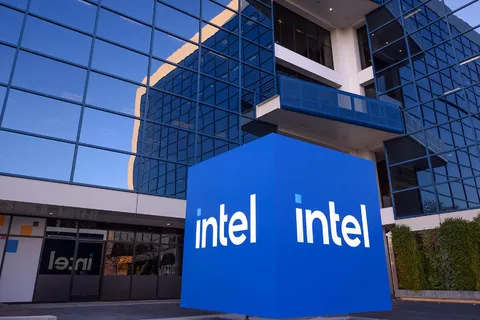
Intel's stock has climbed an impressive 122% so far in 2026, a surge that analysts consider a catch-up trade after years of underperformance. The company's first-quarter results showed compelling evidence that its focus on advanced process technology, domestic manufacturing scale, and specialized silicon is starting to pay off at a critical moment when global artificial intelligence (AI) demand shifts from experimentation to practical industrial use. Investors are now questioning which companies will supply the compute fabric for the next decade of AI.
Intel's three most strategically important businesses witnessed robust growth during Q1. The combined Data Center and AI (DCAI) group grew 22% year over year, generating $5.1 billion in revenue. Growth in the DCAI segment was driven by new Xeon 6 processor deployments with Alphabet and Nvidia, as well as the ramp of Gaudi 3 clusters used by major cloud computing platforms like Amazon Web Services (AWS) and International Business Machines (IBM). Intel's application-specific integrated circuit (ASIC) division doubled year over year, indicating rising demand for custom silicon across hyperscale workloads. Meanwhile, Intel's Foundry segment grew 16% year over year to $5.4 billion as the 18A process node moved into high-volume production amid surging demand for AI-driven advanced packaging. Improved factory yields suggest a turning point in Intel's manufacturing turnaround efforts.
Looking ahead to the next decade, Intel's positioning appears formidable. The company is deepening technical collaborations with big tech, such as Nvidia, and securing support from the U.S. government. While Nvidia dominates AI model training, Intel is strategically embedding its Xeon CPU platform within Nvidia's GPU architecture to build a unified AI system. This collaboration helps Intel secure a role in Nvidia-centric chip deployments. Additionally, the U.S. government's push for sovereign AI infrastructure has turned Intel's foundry into a national asset, helping the company secure billions in CHIPS Act funding. This support could ensure reliable demand and de-risk capital-intensive design and manufacturing efforts.
The hidden macro theme fueling Intel's growth is the impending explosion in AI inference. While training AI models is a one-time process, inference is a continuous, compounding workload that runs around the clock across millions of applications. As more sophisticated applications scale, customers will discover that relying solely on GPU clusters is prohibitive for most inference use cases. Optimizing CPUs alongside GPUs can deliver the optimal balance of performance, power efficiency, and total cost of the chip stack. According to McKinsey & Company, global AI infrastructure capital expenditure (capex) is expected to accelerate into the trillions of dollars annually by 2030, with inference set to claim the major share of this spending. This means that every incremental dollar spent on inference expands Intel's addressable market, improving the company's revenue visibility as long-term supply agreements are secured. Intel is aligning its technology, manufacturing, and strategic partnerships with two key forces that will define the next decade of accelerated computing: sovereign AI infrastructure and the inference supercycle. As these forces come into focus, Intel is poised to become a key supplier of foundational computing horsepower to AI's most influential businesses for years to come.
Source: The Motley Fool