



SpaceX Starfall Demo Flies Tuesday: Disk Capsule Bets on Orbital Manufacturing Scale
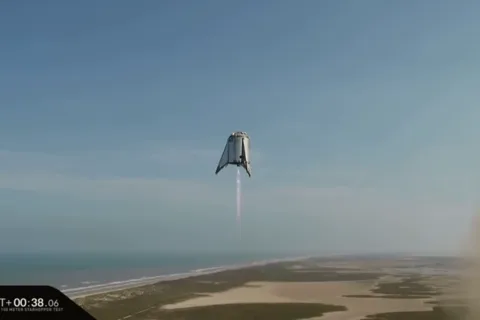
SpaceX is preparing to fly its first Starfall prototype on Tuesday, June 23, in a low-profile demo that could upend the economics of an entire emerging industry. The disk-shaped reentry capsule — designed to return up to 1,000 kilograms of cargo from orbit — is scheduled to launch from Space Launch Complex 40 at Cape Canaveral at 6:43 a.m. ET, with a window that closes at 7:43 a.m. ET. The company has said nothing publicly about the vehicle. What is known comes almost entirely from regulatory filings with the Federal Aviation Administration (FAA) and the Federal Communications Commission (FCC). The significance of Tuesday's test reaches well beyond a single flight. Every orbital manufacturing company currently operating — including Varda Space Industries, which has built the market from scratch over six missions — uses SpaceX's own Falcon 9 rideshares to get their capsules to orbit. If Starfall works, SpaceX will be competing for the cargo return contracts of customers who already depend on it for launch. What Is Starfall, and How Does Its Disk Shape Change the Math? Starfall is not a scaled-down Dragon. It abandons the conical geometry that has defined reentry capsules since Apollo and replaces it with a flat, circular disk — 3.1 meters in diameter and just 0.75 meters tall. The total dry mass is approximately 2,100 kilograms, split between a 1,400-kilogram aluminum top plate and a 700-kilogram carbon-fiber heat shield. That geometry is an engineering choice with direct economic consequences. A conical capsule devotes significant interior volume and structural mass to maintaining its shape under aerodynamic and thermal loads. A disk capsule spreads that load across a broader surface, allowing SpaceX to fit 1,000 kilograms of payload into a 2.5-by-1.5-by-0.5-meter internal bay at a total launch mass of roughly 3,100 kilograms. Competitors in the space return market currently bring back dozens of kilograms per mission. Starfall, at a minimum, represents a 30-fold increase in single-flight return capacity. Starfall also carries no onboard liquid-fueled engine for deorbit maneuvers. Rather than carrying its own propulsion system — as Dragon does — it relies entirely on its launch vehicle, or an external kick-stage, to push it onto a reentry trajectory. Attitude control during descent comes from cold-gas nitrogen thrusters housed inside the heat shield. This is not an engineering shortcoming; it is a deliberate tradeoff. Eliminating deorbit propulsion removes weight and cost, keeps the design simple enough to mass-produce, and offloads the complexity to the Falcon 9 or Starship that already controls its release. Recovery follows a standard parachute sequence — pilot chute, drogue, and a single main — before the 700-kilogram heat shield mechanically jettisons just before splashdown in the Pacific Ocean, roughly 1,300 kilometers off the coasts of California and Mexico. SpaceX recovery vessels retrieve both the top plate and the heat shield from the water separately. Tuesday's Demo: What SpaceX Is Actually Testing Tuesday's mission is not an orbital manufacturing run. It is a reentry, splashdown, and recovery demonstration — the first of two FAA-approved prototype flights. Falcon 9 will carry Starfall on a trajectory from SLC-40 before the capsule executes its reentry arc and splashes down in the Pacific. The priority is confirming that the disk geometry survives atmospheric heating as designed, that the parachute sequence deploys correctly, and that recovery teams can retrieve both vehicle components at sea. Embedded in Tuesday's flight, however, is a secondary test that matters as much to SpaceX's engineering program as the reentry itself. FCC filings reveal that SpaceX is mounting integrated Starlink ground stations directly onto the prototype vehicle. The goal is to maintain a live telemetry link through the plasma blackout phase — the window during hypersonic reentry when the superheated, ionized air surrounding the capsule creates a plasma sheath that blocks all conventional radio frequencies. The plasma blackout problem has existed since the Mercury program in the 1960s. At reentry speeds exceeding Mach 20, the shock-heated air around a vehicle ionizes into a plasma with electron densities high enough to reflect or absorb radio signals below roughly 350 gigahertz — far above the S-band frequencies (2–4 GHz) conventionally used for spacecraft telemetry. The blackout typically lasts 10 to 13 minutes. During those minutes, engineers on the ground receive no data. It was the plasma blackout that severed communications with the Space Shuttle Columbia during its final reentry in February 2003, preventing any diagnostic telemetry from reaching engineers as a breach in the orbiter's wing became catastrophic. SpaceX first proposed testing Starlink terminals through reentry plasma in 2021 FCC filings for Starship's initial orbital test flights, arguing that Starlink's high-frequency phased-array antennas, mounted at angles with clear sightlines to satellites above the plasma sheath, could maintain connectivity where conventional ground links cannot. If Starfall's flight confirms that Starlink terminals work through the blackout, the capability extends beyond Starfall to any SpaceX vehicle — and points toward a relay architecture applicable across the reentry industry. Who SpaceX Is Now Competing Against The orbital manufacturing return market has, until now, been assembled almost entirely by companies flying on SpaceX rideshares. Varda Space Industries, founded in 2021 and based in El Segundo, California, has completed six W-series capsule missions to date. Varda's capsules are purpose-built for pharmaceutical crystal growth in microgravity, and its most recent mission — W-6, launched aboard SpaceX's Transporter-16 in March 2026 and reentered over Australia in May 2026 — carried hypersonic navigation payloads for the Air Force Research Laboratory's Prometheus program alongside commercial research. In May 2026, Varda announced a commercial partnership with United Therapeutics, the pharmaceutical company, to process drug formulations for rare pulmonary diseases in microgravity. It was Varda's first large publicly disclosed pharmaceutical contract, and it signaled that orbital manufacturing had moved past science demonstration into revenue-generating operations. Varda CEO Will Bruey described the shift at the ASCEND 2026 conference as the moment space drugs had gone from research for science's sake to research and development for patients' sake. Varda's capsules return dozens of kilograms per mission. Starfall's design specification is 1,000 kilograms per flight — a gap that changes the economics of what a single mission can deliver and at what cost per kilogram returned. The tension is structural: Varda has flown all six of its W-series missions on SpaceX rockets. If Starfall reaches commercial operations, SpaceX will be offering return-capsule services in direct competition with a company that currently pays SpaceX for every launch. Inversion Space, which flew its first reentry vehicle on a SpaceX rideshare in 2025, encountered technical issues that prevented a planned reentry, leaving it a step behind in the market SpaceX is now entering. SpaceX's stated purpose in FAA documents is to create a "self-sustaining commercial in-space manufacturing market" by offering access to microgravity and vacuum, loiter on orbit, and safe return from orbit at scale. The FAA language also describes Starfall as a potential "proliferated successor" to the International Space Station's materials research role after the ISS is deorbited. What Comes Next Tuesday's demo is the first of two FAA-approved test flights. SpaceX has not announced a commercial customer pipeline or a roadmap for transitioning from prototype to operations — the company has not publicly confirmed Starfall exists in any official communication. Every confirmed detail comes from the regulatory record. A successful reentry and recovery on Tuesday would clear the path for the second demo, after which SpaceX would need to complete FAA vehicle operator licensing before flying paying customers. For the pharmaceutical and semiconductor companies evaluating whether to contract orbital manufacturing time, Tuesday's flight is the first data point that matters: whether a flat-disk capsule SpaceX designed in-house can survive atmospheric entry and return in one piece.
Source: Tech Times