
Tesla Releases Unredacted Robotaxi Crash Reports
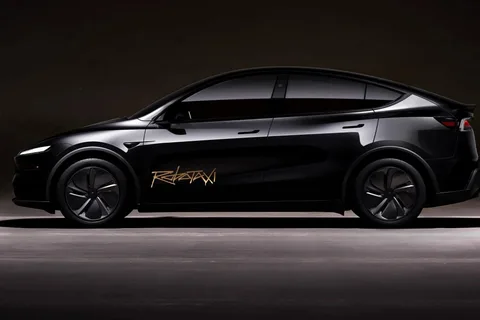
Tesla has quietly pulled back the curtain on its autonomous data, resolving a longstanding point of tension with safety researchers and public advocates. For the better part of a year, the automaker stood alone as the only autonomous vehicle operator filing safety data that hid the contextual specifics of its accidents. Every single incident report filed by Tesla featured a summary with the exact same boilerplate phrase: [REDACTED, MAY CONTAIN CONFIDENTIAL BUSINESS INFORMATION]. Now, however, Tesla has updated its historical filings, making full, unredacted reports available for 19 incidents occurring within its test fleet in Austin, Texas. The newly visible information comes directly from data published on the National Highway Traffic Safety Administration (NHTSA) website under a Standing General Order that requires companies testing or deploying Automated Driving Systems (ADS) to maintain a transparent log of public road accidents. What the Unredacted Summaries Reveal For months, the lack of transparency allowed critics and supporters to project their own assumptions onto the raw incident numbers. Now that the narratives are fully public, the details confirm what automotive data analysts have long suspected: the vast majority of these incidents were minor, low-speed events that were not the fault of Tesla’s Full Self-Driving (FSD) software. Not a Tesla App A substantial portion of the 19 reported incidents involves manually driven cars crashing into stationary Teslas. Multiple summaries describe the car being at a complete halt at an intersection or red light when a human driver behind them slowly rolled or crept forward, rear-ending the vehicle. In dense, low-speed urban environments, external actors caused several no-fault incidents, such as a pedicab clipping the right side mirror of a stopped Tesla or a motor scooter steering right into the rear bumper before hopping a curb to escape onto the sidewalk. High Safety Rates with Safety Monitors Onboard The newly detailed entries also add more clarity to our previous coverage of NHTSA’s multi-company autonomous crash data. Out of Tesla’s 19 total reported incidents, an overwhelming majority resulted in zero injuries. The data shows only two minor injuries across the entire set, with absolutely no high-speed impacts, severe structural failures, or critical injury crashes on the books. Crucially, every single reported event occurred while human safety monitors were present in the front seats. None of the entries stems from Tesla’s fully unsupervised operations, and none suggests a fundamental failure of the core machine-learning logic. Instead, the autonomous vehicle’s own minor errors were restricted to tight parking lots or alleyways — such as a tire scraping a curb or a side mirror striking a metal chain fence or utility pole while reversing at single-digit speeds. That said, Tesla is gradually transitioning its Robotaxi service to fully autonomous operation, with no safety driver or even monitor onboard. In fact, the company’s recent expansion into Dallas and Houston has been entirely unsupervised. A Familiar Trend For Robotaxis The fact that human drivers are responsible for the vast majority of autonomous fleet collisions is becoming a standard benchmark for the self-driving industry. This pattern of human error was recently mirrored when one of the newly mass-produced Cybercabs that Tesla is currently testing on public roads before adding them to the Robotaxi network was rear-ended by a manually driven vehicle. Competitors like Waymo and Zoox have logged higher total incident counts, but they also operate much larger fleets. By providing full transparency to the public, Tesla effectively shifts the conversation back to its safety advantages — having a clear, verifiable narrative prevents minor tire punctures or fender-benders from being blown out of proportion. As the automaker pushes deeper into full commercial operations, this open-source approach to public safety records will be an essential tool in winning over skeptical consumer minds.
Source: Not a Tesla App