



True Anomaly raises $650 million, reaching $2.2 billion valuation
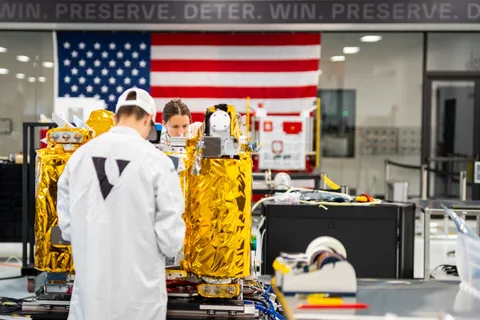
True Anomaly, a U.S. defense space startup, raised $650 million in a Series D funding round on April 28, valuing the company at $2.2 billion. This financing coincides with the company’s entry into the Pentagon’s Golden Dome program, where it is one of 12 contractors selected by the U.S. Space Force’s Space Systems Command to develop space-based interceptors to counter missile threats. True Anomaly’s co-founder and CEO, Even Rogers, highlighted the company’s new hardware and software for space-based interceptors. The Series D round was co-led by Eclipse and Riot Ventures, with participation from new investors like Paradigm, Atreides, G Squared, The Private Shares Fund, and VanEck, alongside existing backers such as Accel, Menlo Ventures, and Meritech Capital. The financing includes $50 million in debt from Stifel Bank. Since its founding in 2022, True Anomaly has raised about $1 billion. The company builds spacecraft and software for U.S. national security missions, including its Jackal satellite, designed for orbit maneuverability, and Mosaic, a mission software platform. True Anomaly is among 14 companies selected by the Space Force to develop satellites monitoring geostationary orbit activity. Initial on-orbit tests of Jackal in low Earth orbit have validated core systems like propulsion and navigation. Future plans include a third test flight, the tactically responsive Space Force mission Victus Haze, and operations in geostationary orbit and cislunar space. The fresh capital will be used to expand manufacturing and hiring, aiming to produce up to 50 Jackal spacecraft annually at its Denver facility. True Anomaly has also expanded to Long Beach, California, growing from about 150 employees last year to roughly 300, with plans to reach 500 by year-end. The Golden Dome program is attracting interest from the space industry, as space is increasingly seen as a potential domain of conflict. Space-based interceptors would track and potentially disable hostile satellites or incoming missiles early in flight, though development faces technical and cost challenges. Rogers emphasized long-term demand for systems operating in contested environments. Regarding an IPO, Rogers noted the company is monitoring investor appetite for space and defense companies but has not set a timeline.
Source: SpaceNews