



US university boosts robotics and Physical AI research with OptiTrack motion capture systems
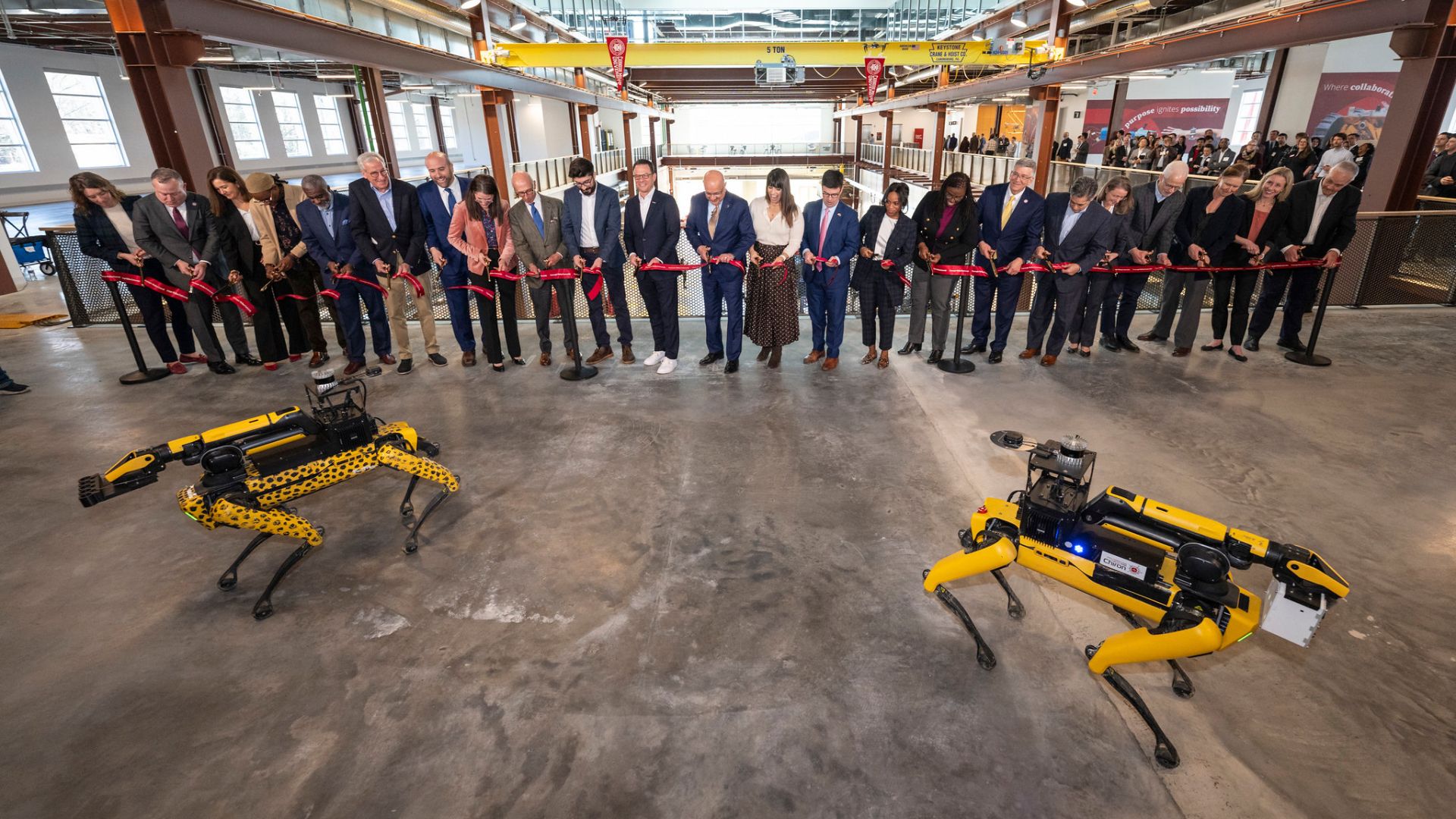
CMU can benefit from precision motion capture solutions and active tracking technology. CMU A US motion capture technology company has partnered with Carnegie Mellon University (CMU) to equip the university’s new Robotics Innovation Center (RIC) with advanced motion capture technology for robotics and physical AI research. OptiTrack has provided high-performance cameras across the center, providing precise 3D tracking for autonomous systems, drones, and robot development. The deployment is designed to support research in robotics, automation, and AI by enabling accurate motion analysis, testing, and validation in controlled indoor and outdoor environments. “Whether tracking multi-robot systems, drone swarms or human movement, OptiTrack’s suite of cameras and sensors will enable a new generation of discovery.” – Martial Hebert, Dean, School of Computer Science, Carnegie Mellon University, in a statement . Advanced robotics tracking OptiTrack has announced a multi-year technology partnership with CMU to equip the university’s newly opened RIC with advanced motion capture systems for robotics and physical AI research. The company installed a total of 92 high-performance cameras across two research facilities: the indoor Motion Capture Studio and the outdoor Drone Cage. The systems are designed to provide highly accurate 3D tracking for autonomous robots, drones, and other intelligent machines, supporting research, testing, and validation in controlled environments. Researchers test autonomous robots inside Carnegie Mellon University’s Robotics Innovation Center. CMU officially opened the 150,000-square-foot RIC on February 27, 2026. Located at Hazelwood Green on the former Jones & Laughlin Steel Mill site in Pittsburgh, the facility includes a 50,000-square-foot robotics testing floor, an aquatic research laboratory, a motion capture studio, and a 6,000-square-foot outdoor drone testing cage. The center is intended to accelerate the development of robotics and physical AI technologies and help move them from laboratory research into real-world applications. The indoor Motion Capture Studio is equipped with 28 PrimeX41 cameras and four Prime Color reference cameras, delivering micron-level tracking accuracy across a 2,800-square-foot capture volume. The outdoor Drone Cage features 60 VersaX120 cameras, OptiTrack’s highest-resolution outdoor system, built with IP66-rated weather protection to withstand outdoor conditions while tracking objects throughout the 38-foot-high enclosure. Both installations use OptiTrack’s proprietary ActiveIO Tracking technology, enabling the simultaneous identification and precise tracking of hundreds of moving objects for advanced robotics and autonomous systems research. Physical AI accelerated The new motion capture systems will support a wide range of research programs at RIC, spanning autonomous robotics, physical AI, and extended reality. One of the primary beneficiaries is the university’s AirLab, where researchers develop autonomous aerial robots and multi-robot coordination technologies for complex real-world environments. The systems will also support research that focuses on robotic imitation learning and human activity modeling. In addition, the installation aligns with CMU’s recently launched Physical AI Accelerator, a state-backed initiative aimed at advancing intelligent machines by integrating robotics , sensing technologies, and AI. Beyond robotics, OptiTrack has joined CMU’s Extended Reality Technology Center (XRTC) as an industry sponsor. Established in 2023, the center brings together researchers, technology companies, and end users to advance virtual reality, augmented reality, and other extended reality technologies. Researchers plan to use the motion capture systems at the Robotics Innovation Center to recreate real-world movements in immersive virtual environments, enabling more realistic simulations and human-machine interaction studies. OptiTrack claims its technology delivers sub-millimeter tracking accuracy—down to 50 microns—allowing researchers and engineers to precisely measure and analyze movement in demanding applications ranging from robotics laboratories to autonomous systems.
Source: Interesting Engineering