



Apple’s capital spending is heading the opposite direction of Big Tech
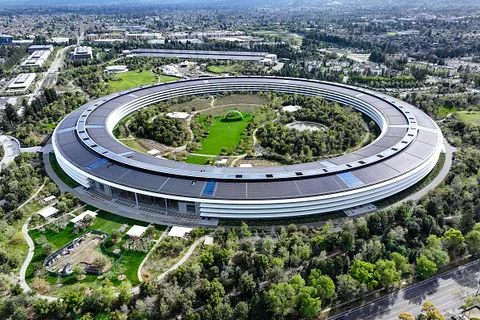
The big story in Big Tech has been just how much they’re spending on capex to furnish their AI futures. Not only are Alphabet, Amazon, Meta, and Microsoft spending more than ever, they’re also spending more than they said they would just a quarter earlier. In total, their 2026 capital expenditure bill is now slated to surge beyond $700 billion. Apple, by contrast, continues to take a different approach. The company has lagged peers in developing its own frontier AI models and has leaned more on partnerships.
The strategy certainly doesn’t seem to be hurting Apple yet. The company posted record revenue in the March quarter that beat analysts’ expectations this week, even without a robust AI offering. Apple’s capex actually fell in the March quarter. Its payments for acquisition of property, plant, and equipment totaled about $1.9 billion in its fiscal second quarter, down 36% from roughly $3 billion a year earlier. So on a year-over-year basis, Apple’s capex declined while everyone else’s jumped sharply.
Meta pushes deeper into AI robots with the acquisition of robotics AI startup Assured Robot Intelligence, doubling down on its push into humanoid tech. The team will join Meta’s Superintelligence Labs to build models that let robots ‘understand, predict, and adapt to human behaviors in complex environments.’ The goal is to be the Android of robots: building the software and hardware foundation others can use.
Reports of shortages are not lost on Apple. During this week’s earnings call, outgoing CEO Tim Cook acknowledged the supply constraint of the popular desktops: ‘On the Mac mini and the Mac Studio, both are amazing platforms for AI and agentic tools, and the customer recognition of that is happening faster than predicted.’ Cook noted that the Mac mini was the top-selling desktop computer in China last quarter, where the DIY agentic AI boom is especially popular. Supply chain constraints are adding to the problem, which may take several months to reach supply/demand balance. Apple will start manufacturing the Mac mini in the US later this year.
Data from IDC and Counterpoint Research shows Apple accounted for 19% of smartphone shipments in China in the first calendar quarter of 2026, just behind Huawei at 20%. Analysts say Apple is poised to take the lead soon, helped by rising memory chip costs pushing up competitors’ prices. Apple’s China revenue rose 28% in the March quarter, ahead of analyst estimates, and is up 33% in the first half of the year.
Source: Sherwood News