



Real-time learning powers French AI humanoid for industrial applications
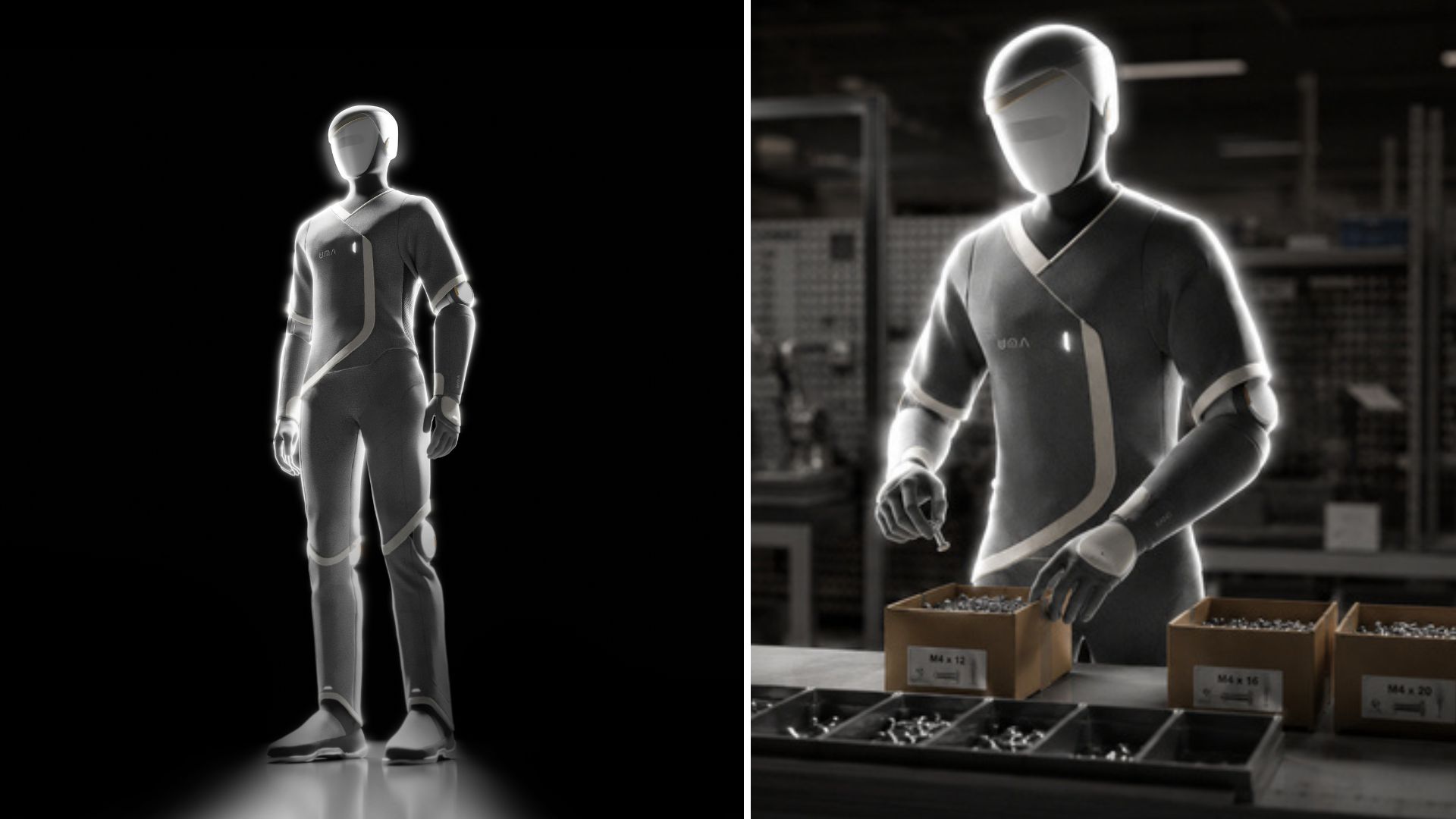
French robotics firm UMA has unveiled the design of its first AI-powered humanoid robot at the Machina Summit in Paris. The humanoid features human-scale proportions, a neutral visor instead of a face, and visible mechanical joints. The company is targeting manufacturing, logistics, and, eventually, home applications, with Europe as its first market. The company also introduced Real-Time Learning, a new AI architecture that allows robots to learn new tasks through human demonstrations instead of manual programming. The technology is designed to speed up robot training and reduce deployment time. Recently, US-based Weave Robotics unveiled Isaac 1, an autonomous home robot that tidies rooms, does laundry, and uses remote human assistance when needed. Smarter humanoid offerings UMA is developing its first humanoid robot as a practical industrial platform designed for real-world deployment rather than technology demonstrations. The company is targeting factories, warehouses, logistics centers, and other workplaces already built for people, allowing its robots to integrate into existing operations without requiring costly infrastructure changes. By adopting a human-sized form factor, the robot can use standard tools, navigate human-oriented environments, and work alongside employees. At the core of the platform is UMA’s Real-Time Learning architecture, an AI system that enables robots to acquire new skills through human demonstrations instead of manual programming. Rather than requiring engineers to write new code for every application, the robot can observe a task, practice it, adapt to changing conditions, and improve its performance through experience. UMA says this learning model mirrors the way people develop new skills, making robots more flexible and easier to deploy across a wide range of industrial applications. The company believes this represents the next stage of industrial robotics. Instead of creating robots that can perform only predefined tasks, the focus shifts to machines capable of continuously learning new ones. As the robot gathers operational experience, it can refine its execution, respond to unfamiliar situations, and require less engineering effort when introduced to new workflows. UMA says this approach can reduce deployment time while improving scalability across manufacturing and logistics operations. Industrial AI platform The robot’s physical design also reflects its industrial focus. Instead of using a human-like face, UMA has equipped the humanoid with a neutral visor that clearly distinguishes it from a person. Though detailed specifications are not released, it combines human-scale proportions with a soft technical outer shell while intentionally exposing its mechanical joints, emphasizing functionality over human imitation. The company describes the design as a balance between accessibility and transparency, allowing the robot to appear approachable without creating confusion between humans and machines. Rather than optimizing the platform for short public demonstrations, UMA says it has engineered the robot for long-term reliability in demanding industrial environments. The goal is to create a humanoid that performs repetitive tasks consistently, integrates naturally into daily operations, and becomes increasingly capable as it accumulates experience. While much of the global humanoid robotics race is centered in the US and China, UMA is positioning Europe as its primary launch market. The company believes the region’s strong manufacturing base, world-class research ecosystem, and growing labor shortages create ideal conditions for Physical AI. “Humanoid robots will take years to reach large-scale deployment, just as the internet and smartphones required time before transforming entire industries. We believe intelligent robots will reshape the physical economy in much the same way,” said Rémi Cadène, CEO and co-founder of UMA, in a statement.
Source: Interesting Engineering