



How Chinese engineer Howard Huang become billionaire supplying robotic ‘eyes’
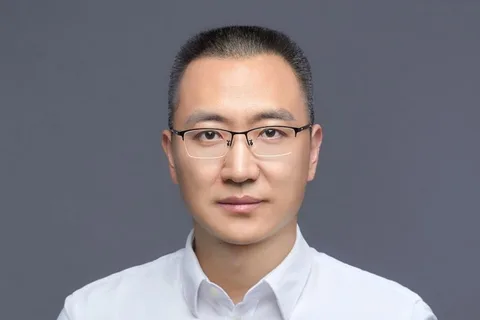
Howard Huang, founder of Shenzhen-based Orbbec, has become a billionaire after turning the company into a major supplier of 3D vision sensors, often described as robotic “eyes,” as demand for humanoid robots drives up its shares. Founded in 2013, Orbbec began by making vision sensors for 3D scanning and biometrics. It also produces lidar, short for light detection and ranging, sensors used for long-range tasks such as navigation. These sensors are used in industrial robots, autonomous mobile robots, robotic arms, self-driving cars, drones, and increasingly, AI-powered humanoid robots. The technology allows robots to perceive depth much like humans do, helping them move through complex environments and interact more accurately with their surroundings. Orbbec’s 3D vision cameras have become key parts in robots such as X-Humanoid’s Tiangong Ultra, which beat some 20 robot runners in what was billed as the world’s first humanoid half-marathon on April 20, 2025. The robot completed the 21.0975-kilometer race in 2 hours, 40 minutes and 42 seconds, according to Chinese state broadcaster CGTN. "We want to give robots vision capabilities that surpass those of humans," Huang, 46, also chairman and CEO of Orbbec, said in a recent video interview with Forbes. His ambition comes as the global robotics market continues to expand rapidly. Ireland-based Research and Markets estimated in a report last June that the market will grow at a 14% compound annual growth rate, reaching $179 billion by 2033 from $53 billion in 2024. China, the world’s largest robotics market, is driving much of that demand with strong government support, according to a June report by Morgan Stanley. Shanghai-listed Orbbec, which gets 90% of its revenue from China and the rest from markets including South Korea, Singapore, Japan, and the U.S., is already benefiting from that growth. In the first nine months of 2025, the company posted a net profit of 69 million yuan ($9.8 million), reversing a net loss of 102 million yuan a year earlier. Revenue more than doubled to 714 million yuan. Its shares surged more than 315% over the year, lifting its market value to $5.2 billion and boosting the fortune of Huang, who owns a 27% stake, to $1.6 billion as of mid-January, according to Forbes. Howard Huang, founder of Shenzhen-based Orbbec, described his childhood as "uneventful," with a father working at a state-owned institution and a mother teaching at a secondary school. He earned a bachelor’s degree from Peking University, a master’s degree from the National University of Singapore, and a Ph.D. from City University of Hong Kong, all in engineering. He later worked as a research fellow specializing in 3D optical measurement at institutions including the Singapore-MIT Alliance for Research and Technology and Hong Kong Polytechnic University. But academic life left him dissatisfied. "In academia, I was publishing research papers; I couldn’t see their real-world application," he said. "What we’re doing now is writing research papers in the factory, writing them for the industry." A 2004 sci-fi film "I, Robot," which imagined a world in 2035 where robots were part of daily life, helped shape his vision to start a company. In 2013, he borrowed 10 million yuan from four high school friends and rented a factory to begin producing 3D vision sensors. "Academia was simple, I worked on principles and algorithms, and used cameras I bought to build a demo and that’s it," Huang says. "But as a company, we had to handle everything in-house, from making molds to product designs. It was a real challenge." The breakthrough came in 2017, when Orbbec secured a deal with Ant Group to supply cameras for Alipay’s facial recognition payment system. A year later, it partnered with Chinese smartphone maker Oppo to launch the world’s first Android phone with 3D facial recognition, seven months after Apple introduced the feature on the iPhone. Oppo initially doubted whether a small company like Orbbec could deliver. "[Oppo] at first had concerns about our reliability, but in the end they couldn’t find anyone more reliable than us," Huang said in a 2023 interview with Guangdong Radio and Television. "We were confident. It was challenging, but if Apple could do it, why couldn’t we?" Among Orbbec’s major customers is Chinese fintech giant Ant Group. Its Alipay platform uses Orbbec’s cameras for facial recognition in contactless payments. Its robotics clients include cleaning robot makers Pudu Robotics and Gausium, South Korean patient care robot firm Robocare, and warehouse robot maker Twinny. More recently, Huang has focused heavily on humanoid robots, which he sees as the industry’s biggest long-term opportunity. His customers include world's largest humanoid robot maker AgiBot, UBTech, Ant-backed Stardust Intelligence, and Ant’s Robbyant unit, all are based in China. Huang’s main rival is California-based RealSense, which split from Intel in July and, like Orbbec, serves more than 3,000 clients, including Unitree Robotics, Boston Dynamics and Agility Robotics. RealSense said its depth cameras are used in 60% of the world’s autonomous mobile robots and 80% of humanoid robots. Orbbec declined to comment, but Zhong Len, general manager of its robot product line, said it "has secured more than three-quarters of the world’s leading cleaning and delivery bot makers as customers." Song Zhan of Shenzhen Institutes of Advanced Technology said Orbbec’s cameras rival RealSense in performance and offer more model options. "RealSense only has a few models. If they work, great—if not, there’s not a lot of other options." Customers said Orbbec stands out for combining quality with competitive pricing. Zhang Qiang, chair of the research committee at X-Humanoid, said robot makers value image quality, operational stability, and consistency in large-scale production, adding that Orbbec’s vision sensors are cost-effective, highly complete, and backed by strong after-sales support. Orbbec is now raising 980 million yuan through a private share placement to develop more advanced sensors and algorithms. Part of the funds will also expand its 120,000-square-meter factory in Guangdong, southern China, which began operations in 2024. In an interview last year with City University of Hong Kong, Huang said his motto for Orbbec is: "Climb the highest peaks in the best of times, and tackle the toughest challenges in the most cutting-edge industries." "Achieving global influence in the robotics industry, that is the highest peak we aim to conquer."
Source: VnExpress International