


02 Jul 2026
Hyperspace exploration using robotics for the discovery of mechanistically distinct transformations and complex functional products
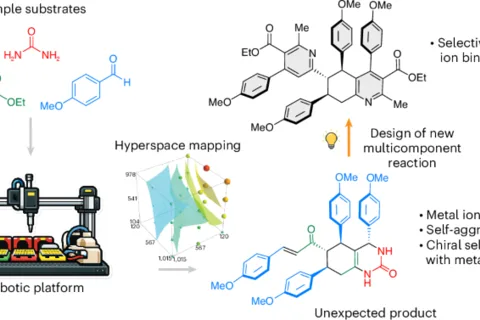
The discovery of new chemical reactions has historically been one of the most powerful drivers of progress in chemistry, enabling access to molecular architectures that underpin medicines, materials and catalysts. Traditionally, such breakthroughs have depended on human intuition, incremental exploration or chance observations. However, recent advances in chemical automation 1 , 2 , 3 , 4 and…
26 Jun 2026
Interpretable abstractions of artificial neural networks predict behavior and neural activity during human information gathering
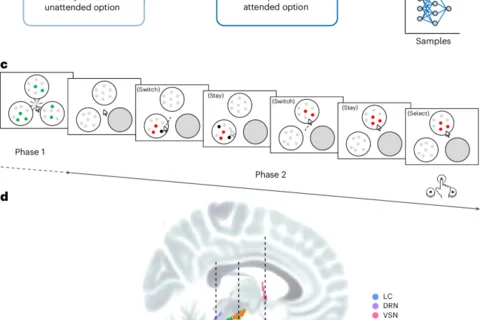
Main Decisions should be based on evidence. Once sufficient evidence has been sampled, the agent can decide which option to select (Fig. 1a , top). But in addition to guiding the choice, evidence should also simultaneously be used to evaluate whether there is sufficient information to warrant a decision or whether further information must be sampled (Fig. 1a , bottom) 1 , 2 , 3 , 4 . When…
22 Jun 2026
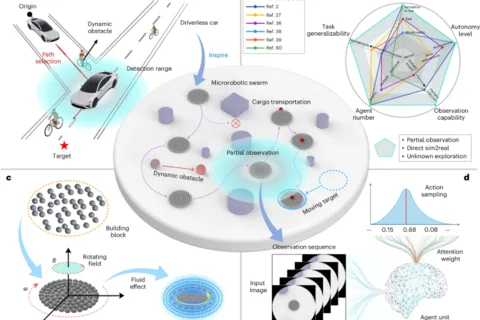
Autonomous navigation of intelligent microrobotic swarms in unknown environments
Autonomous navigation of intelligent microrobotic swarms in unknown environments
22 Jun 2026
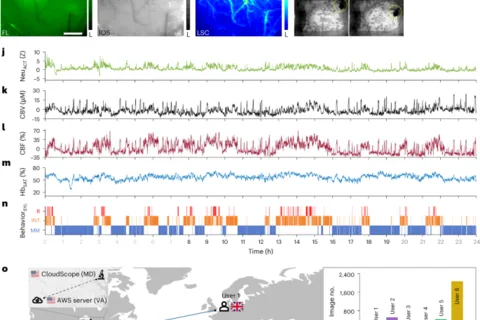
A cloud-based miniscope for neurosurveillance of brain health and disease in freely behaving animals
Main The ability to conduct continuous (≥24 h), neuroimaging of multiple physiological variables (for example neuronal activity (Neu ACT ), blood flow, blood volume, oxygenation and cellular dynamics) within the CNS microenvironment is crucial for characterizing preclinical models of CNS disease (Supplementary Table 1 ). We refer to this continuous multimodality neuroimaging capability as…
17 Jun 2026
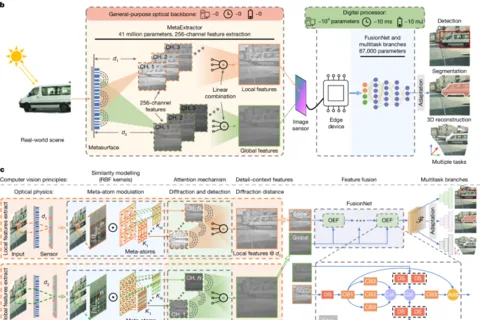
Optical metasurfaces for general vision processing on the edge
By embedding core computer vision principles into a large-scale optical metasurface, an efficient vision processing system using far fewer parameters is demonstrated to outperform many digital models and enables deployment on edge devices.
17 Jun 2026
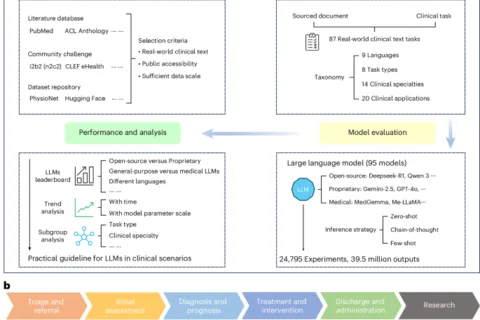
BRIDGE: benchmarking large language models for understanding real-world clinical practice texts
The BRIDGE benchmark systematically evaluated the performance of 95 large language models (LLMs) on real-world clinical data on tasks spanning the patient care continuum. This benchmark, which is being continuously updated, provides a field reference for improving how LLMs understand clinical texts.
08 Jun 2026
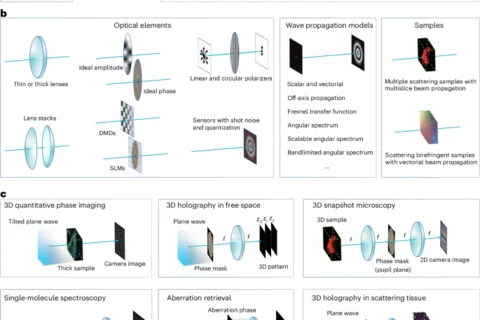
Chromatix: a differentiable, GPU-accelerated wave-optics library
Main Many current microscopy methods increasingly rely on computation as an integral part of the imaging process. This model-based approach to optics—integrating optical system design with algorithmic reconstruction or optimization—has had major implications for biological discovery.
02 Jun 2026
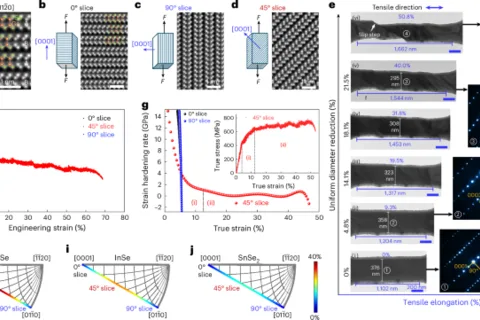
Van der Waals strain hardening and large uniform tensile elongation in GaSe
Data availability The data that support the findings of this study are available from the corresponding authors upon request. Source data are provided with this paper.
25 May 2026
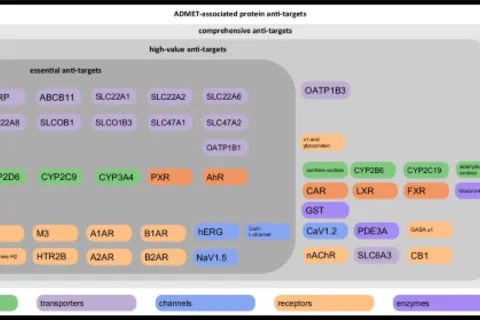
Mapping the avoid-ome: a systematic open-science approach to predictive ADMET
Over the last 20 years, the number of new drug modalities have multiplied quickly 1 . Despite this, the oldest modality, small molecules, still accounts for ~3/4 of drugs approved by the FDA over the last decade 2 , 3 . Small molecules continue to dominate and even flourish for three main reasons: (1) small molecules have inherent distribution advantages with potential to reach every organ, cell,…